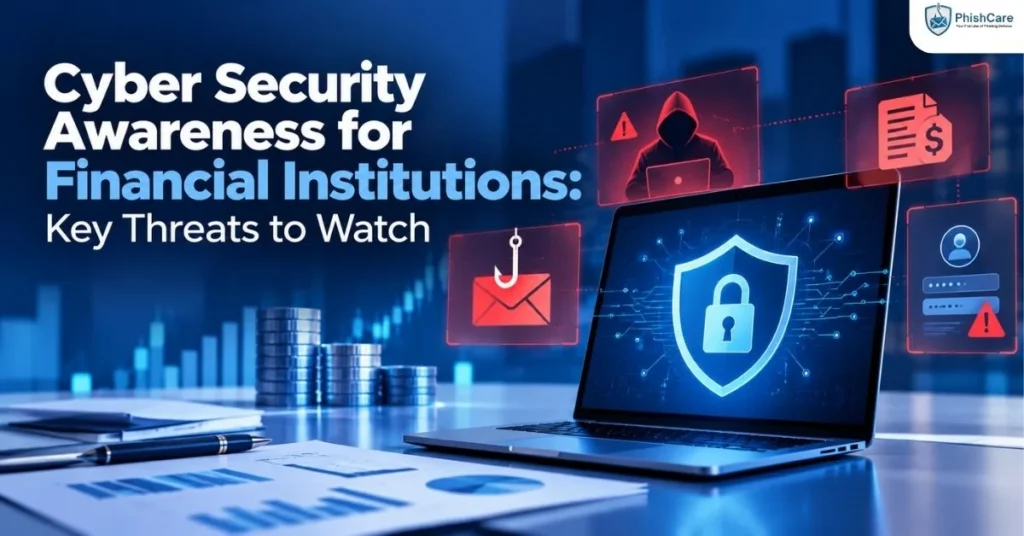
Financial institutions operate in one of the most targeted sectors in the global cyber threat landscape. Banks, insurance providers, fintech companies, and investment firms manage highly sensitive financial data, making them prime targets for cybercriminals. From account credentials and transaction data to personal customer information, the assets held by financial organisations are valuable and attractive to attackers.
In 2026, cyber threats targeting financial institutions have become increasingly sophisticated. Attackers no longer rely solely on technical vulnerabilities. Instead, they focus on human behaviour, using phishing emails, impersonation tactics, and social engineering techniques to bypass security controls. A single employee action, such as approving a fraudulent transaction or entering credentials into a fake login page, can result in significant financial loss and reputational damage.
While financial institutions invest heavily in advanced security infrastructure, technology alone cannot eliminate these risks. Employees interact with systems, emails, and transactions daily, making them a critical part of the organisation’s security posture. This is why cyber security awareness has become an essential component of risk management in the financial sector.
Understanding the key threats facing financial institutions and strengthening employee awareness are crucial steps in preventing cyber incidents. By focusing on both technical defenses and human behaviour, organisations can reduce their exposure to evolving cyber risks.
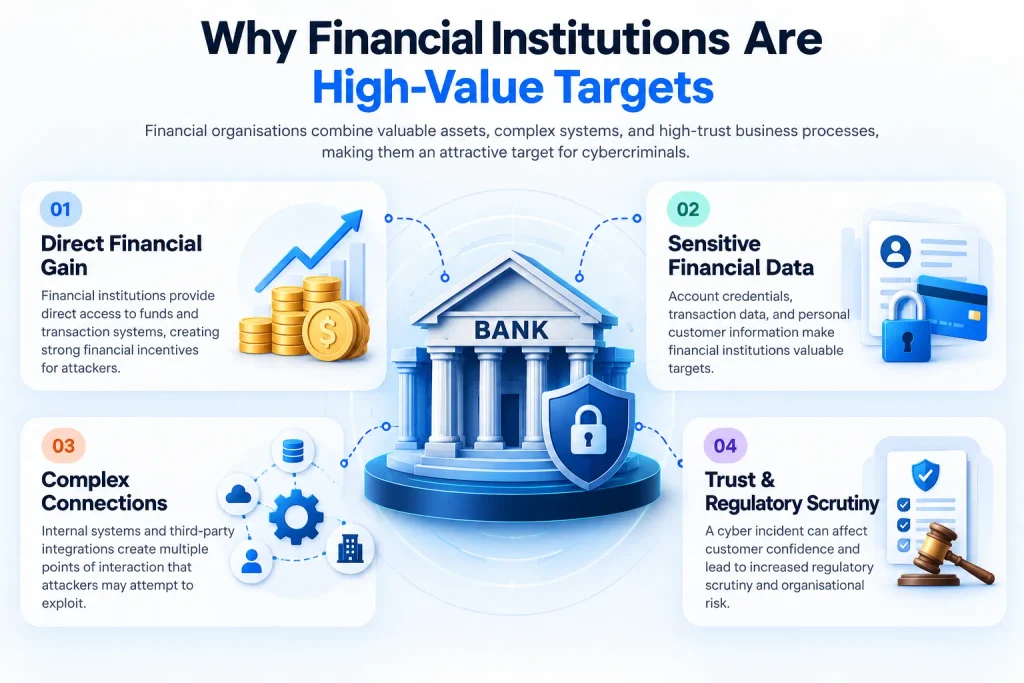
Why Financial Institutions Are High-Value Targets
Direct Financial Gain
Financial institutions are attractive targets for cybercriminals because of the direct financial gain associated with successful attacks. Unlike other sectors, where attackers may need to monetise stolen data indirectly, financial organisations provide immediate access to funds and transaction systems.
Complex Networks and Integrations
Additionally, financial institutions often maintain complex networks of internal systems and third-party integrations. These connections create multiple entry points for attackers to exploit.
Customer Trust and Regulatory Scrutiny
Customer trust is also a critical factor. A cyber incident affecting a financial institution can have widespread impact, influencing customer confidence and regulatory scrutiny. Because of these factors, attackers invest significant effort into crafting targeted and convincing phishing campaigns against financial organisations.
Financial teams should also remain alert to phishing attempts connected to sensitive transactions. Understanding how attackers exploit transaction workflows can help employees recognise suspicious requests before acting on them.
Key Phishing and Social Engineering Threats
Phishing remains one of the most common attack methods targeting financial institutions. Attackers frequently impersonate internal employees, senior executives, or trusted partners to gain access to systems or initiate fraudulent transactions.
Business Email Compromise
Business email compromise attacks are particularly prevalent. In these scenarios, attackers impersonate executives or finance personnel to request urgent transfers or changes to payment details.
Credential Harvesting
Credential harvesting is another major threat. Employees may receive emails that appear to come from legitimate platforms, prompting them to log in through fake portals.
Learn how to spot a fake login page before credentials are captured.
Smishing and Vishing
Smishing and vishing attacks are also increasing. These involve phishing attempts delivered through text messages or voice calls, often targeting employees with urgent requests related to account activity or transactions. These threats exploit trust and urgency, making them difficult to detect without proper awareness.
Social Engineering
Attackers use social engineering techniques to exploit trust and urgency, making convincing requests that can lead employees to reveal information, access systems, or initiate fraudulent transactions.
Understanding the human element behind social engineering attacks can help financial teams recognise suspicious patterns before responding to high-pressure requests.
Insider Risk and Human Error
Human error remains one of the leading causes of security incidents in financial institutions. Employees may unintentionally expose sensitive information by responding to phishing emails, using weak passwords, or bypassing verification procedures.
Unintentional Exposure
Insider risk is not always malicious. In many cases, it results from a lack of awareness or pressure to complete tasks quickly.
Speed Over Verification
Because financial operations often involve time-sensitive decisions, employees may prioritise speed over verification.
Urgency as a Tactic
Attackers take advantage of this by creating messages that require immediate action. Strengthening awareness helps employees recognise these situations and respond more cautiously.
Employees should be encouraged to pause, verify unusual requests, and report suspicious activity before taking action.
Third-Party and Supply Chain Risks
Financial institutions rely heavily on third-party vendors, including payment processors, technology providers, and external consultants. Communication with these partners is frequent and often involves sensitive information.
Vendor Impersonation
Attackers exploit this environment by impersonating vendors or partners in phishing emails. These messages may request payment changes, document access, or system credentials.
Normal-Looking Requests
Because these requests align with normal business processes, employees may not immediately recognise them as threats.
Awareness Should Reflect Real-World Communication
Awareness training should therefore include scenarios that reflect third-party communication risks.
Regulatory and Compliance Pressures
Financial institutions operate under strict regulatory frameworks designed to protect customer data and financial systems. Cyber incidents can trigger regulatory investigations, fines, and increased scrutiny.
Awareness as Part of Risk Management
Awareness programs play an important role in demonstrating proactive risk management. Regulators often expect organisations to implement employee training and awareness initiatives as part of their security strategy.
By strengthening employee awareness, financial institutions can reduce the likelihood of incidents and support compliance efforts.
This is particularly relevant for insurance organisations, where employee awareness forms an important part of protecting sensitive customer and business information. Learn more about cybersecurity awareness for insurance companies.
Building a Strong Awareness Strategy
An effective awareness program for financial institutions must go beyond theoretical training. Employees need practical guidance on how to recognise and respond to real-world threats.
Regular Phishing Simulations
Regular phishing simulations help reinforce awareness by exposing employees to realistic attack scenarios. These simulations allow organisations to measure behaviour and identify areas of vulnerability.
Clear Verification Processes
Employees should be trained to confirm unusual requests, particularly those involving financial transactions or sensitive data.
Strong Reporting Culture
Encouraging a strong reporting culture ensures that suspicious activity is escalated quickly, allowing security teams to respond before damage occurs.
Measure and Reinforce
By combining realistic simulations with ongoing awareness activities, organisations can identify areas of vulnerability and reinforce safer employee behaviour.
Learn more about phishing simulation and cyber insurance and how training data can support broader risk management efforts.
Strengthening Financial Security With PhishCare
Practical exposure to realistic phishing scenarios is critical for improving employee awareness in financial institutions. PhishCare supports organisations through structured phishing simulation campaigns designed to reflect modern attack techniques.
Targeted Phishing Simulations
These simulations include scenarios such as executive impersonation, urgent payment requests, and vendor-related communications that closely resemble real threats faced by financial teams.
Immediate Feedback
When an employee interacts incorrectly with a simulated phishing email, PhishCare provides immediate feedback explaining the warning signs that were missed. This moment-based learning helps reinforce awareness and improve future decision-making.
Track Awareness Over Time
PhishCare also provides behavioural reporting insights that allow organisations to track improvements in employee vigilance over time. These insights help security teams identify high-risk areas and strengthen awareness efforts.
By combining realistic simulation with continuous reinforcement, financial institutions can reduce the likelihood of phishing-related incidents and strengthen their overall security posture.
Staying Ahead of Evolving Threats
Cyber threats targeting financial institutions will continue to evolve as attackers adopt new techniques and technologies. Organisations that rely solely on technical defenses may struggle to keep pace with these changes. Employee awareness provides a critical layer of protection that complements technical controls. When employees can recognise and respond to suspicious activity, the organisation becomes more resilient against cyber attacks.
Strengthen Awareness
Help employees recognise suspicious emails, requests, and social engineering techniques before they lead to security incidents.
Reinforce Secure Behaviour
Regular awareness activities and practical simulations can reinforce safer decision-making across financial teams.
Measure Improvement
Continuous measurement helps organisations identify areas of vulnerability and strengthen their awareness strategy over time.
Investing in awareness, reinforcing secure behaviour, and continuously measuring improvement are essential steps in managing cyber risk in the financial sector.
Frequently Asked Questions
Why are financial institutions frequently targeted by cyber attacks?
Financial institutions are targeted because they manage valuable financial data and provide direct access to funds, making them attractive to cybercriminals.
What are the most common phishing attacks in financial institutions?
Common attacks include executive impersonation, business email compromise, credential harvesting, and vendor-related phishing scams.
How can financial institutions reduce phishing risk?
They can reduce risk through employee awareness training, phishing simulation campaigns, strong authentication measures, and clear verification processes.
What role does employee awareness play in financial security?
Employees play a critical role in recognising suspicious activity, verifying requests, and reporting threats before they lead to incidents.
How often should awareness training be conducted in financial institutions?
Training should be conducted regularly throughout the year, supported by ongoing phishing simulations to reinforce awareness.
Strengthen Your Financial Institution’s Phishing Resilience
Help your employees recognise phishing threats, respond to suspicious requests, and build stronger security awareness with realistic phishing simulations.
Content Reviewed By

Nawaz is a practising security analyst specializing in phishing simulation campaigns, employee awareness assessments, red team exercises, and ethical hacking.
He leads phishing simulation deployments at PhishCare, a product developed by CyberSapiens, with hands-on experience evaluating and deploying phishing simulation tools across organizations in multiple industries and regions globally.
View LinkedIn Profile