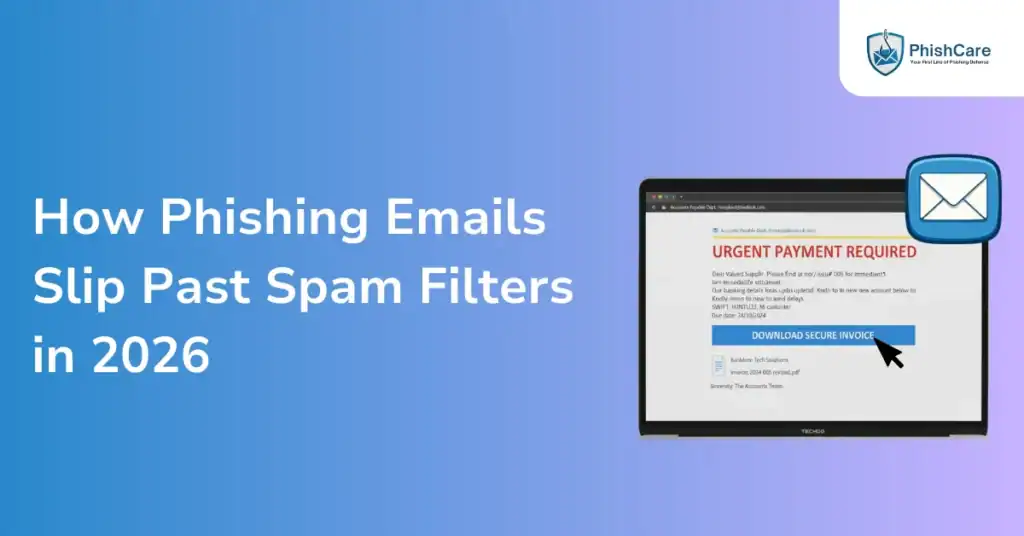
Email security has advanced significantly over the past decade. Modern spam filters use sophisticated detection techniques, including machine learning, sender reputation analysis, authentication protocols, and behavioral filtering. Despite these improvements, phishing attacks continue to bypass email security controls and reach employee inboxes at alarming rates. This raises an important question. If spam filters have become so advanced, why do phishing emails still succeed?
The answer lies in the fundamental shift in how phishing attacks are designed and executed. Modern phishing campaigns no longer resemble traditional spam. Instead of relying on mass distribution from suspicious sources, attackers use legitimate infrastructure, compromised accounts, and highly personalized messaging that blends seamlessly into normal business communication.
In 2026, phishing attacks are no longer simply malicious emails. They are carefully engineered social engineering operations designed to bypass technical detection and exploit human trust. Understanding how these attacks evade spam filters is critical for organizations seeking to strengthen their email security posture.
Spam Filters Were Designed to Stop Known Threat Patterns
Spam filters operate by analyzing technical signals associated with malicious or unsolicited emails. These systems evaluate multiple attributes, including sender reputation, domain history, authentication status, email structure, and sending behavior.
Traditional detection methods rely on identifying patterns such as:
- Emails originating from known malicious IP addresses
- Domains with poor reputation or recent registration
- Bulk sending behavior targeting large recipient groups
- Suspicious email formatting or keyword usage
When these indicators are present, spam filters flag or block the email before it reaches the user. This approach is effective against conventional spam campaigns, which rely on volume and predictable infrastructure. Modern phishing attacks, however, are specifically designed to avoid triggering these detection signals.
Compromised Legitimate Accounts Allow Phishing Emails to Appear Trusted
One of the most effective ways phishing emails bypass spam filters is by originating from legitimate accounts. Instead of sending emails from newly created or suspicious domains, attackers gain access to real email accounts belonging to employees, vendors, or partners.
Once an account is compromised, attackers can send phishing emails that appear authentic in every technical aspect. These emails originate from trusted domains, pass authentication checks, and align with normal communication patterns.
From the perspective of the spam filter, there is no obvious indication that the email is malicious. Because sender reputation remains one of the most important factors in email filtering, compromised accounts provide attackers with a powerful method to bypass detection.
Phishing Emails Now Use Legitimate Infrastructure
In the past, phishing attacks often relied on suspicious domains and poorly constructed websites. Modern phishing attacks are far more sophisticated.
Attackers now host phishing content on trusted platforms such as cloud storage services, document sharing platforms, and collaboration tools. These platforms are widely used in business environments and have strong reputations. As a result, emails containing links to these platforms are less likely to be blocked.
For example, attackers may send emails containing links to documents hosted on legitimate services. These links appear safe because the domain itself is trusted. However, the content within the link may redirect users to credential harvesting pages or initiate malicious workflows. Spam filters are less effective at detecting threats delivered through trusted infrastructure.
Phishing Emails Are Increasingly Personalized and Contextual
One of the defining characteristics of phishing in 2026 is the level of personalization. Attackers use publicly available information to craft emails that appear relevant and credible.
This information may include:
- Employee names and roles
- Organizational structure
- Vendor relationships
- Current projects or initiatives
By incorporating contextual details, phishing emails appear indistinguishable from legitimate business communication. Spam filters are designed to detect patterns associated with bulk email campaigns. Highly personalized emails do not generate these patterns, making detection more difficult.
Authentication Protocols Cannot Prevent All Phishing Attacks
Email authentication protocols such as SPF, DKIM, and DMARC play an important role in preventing email spoofing. These protocols verify that an email originates from an authorized domain. However, authentication protocols do not verify the intent of the sender.
If attackers compromise a legitimate account or use authorized infrastructure, authentication checks will pass successfully. The email appears legitimate even though it contains malicious intent. Spam filters rely heavily on authentication signals. When these signals indicate legitimacy, the email is more likely to be delivered.
Phishing Emails Are Designed to Mimic Legitimate Workflows
Modern phishing emails often imitate routine business processes. Instead of using obvious malicious language, attackers create emails that resemble everyday operational communication.
Examples include:
- Document sharing notifications
- Password reset confirmations
- Invoice approval requests
- Internal system alerts
These emails align with normal employee expectations. Because they resemble legitimate workflows, they do not trigger suspicion from technical filters or recipients. This allows phishing emails to blend seamlessly into the email environment.
Attackers Continuously Adapt to Security Improvements
Spam filtering technologies rely on detecting known indicators and patterns. Attackers continuously evolve their techniques to avoid detection.
This includes:
- Rotating infrastructure frequently
- Using newly compromised accounts
- Modifying email content to avoid pattern recognition
- Leveraging trusted platforms and services
Because phishing techniques evolve faster than detection models, there is always a gap between new attack methods and security response. This adaptation makes phishing a persistent threat.
Internal Phishing Represents a Significant Detection Challenge
When attackers gain access to internal email accounts, they can send phishing emails directly to other employees within the same organization.
These emails originate from trusted internal addresses and follow normal communication patterns. Traditional spam filters focus primarily on external threats. Internal emails often bypass these filters entirely. Employees are more likely to trust emails from coworkers, increasing the likelihood of successful compromise.
Artificial Intelligence Has Increased the Sophistication of Phishing Attacks
In 2026, attackers increasingly use artificial intelligence to generate phishing emails. These tools allow attackers to create highly realistic and grammatically correct messages that closely resemble legitimate communication.
AI enables attackers to:
- Generate personalized email content at scale
- Mimic writing styles and tone
- Adapt messaging based on target roles
This increases the effectiveness of phishing attacks while reducing detectable patterns. Spam filters that rely on identifying poorly written or suspicious content are less effective against AI generated phishing emails.
The Human Element Remains the Primary Target
Spam filters are designed to analyze technical attributes. Phishing attacks target human decision making. Attackers rely on psychological techniques such as urgency, authority, and familiarity to influence user behavior. Even when technical defenses are strong, human interaction remains a critical vulnerability. A single employee interacting with a phishing email can lead to credential compromise and broader system access.
Strengthening Defense Against Phishing Requires a Human-Focused Approach
Spam filters remain an essential layer of email security. They reduce exposure to known threats and block large volumes of malicious email. However, they cannot detect every phishing attempt, particularly those that use legitimate infrastructure, compromised accounts, and personalized messaging.
Organizations must complement technical controls with visibility into human risk. Phishing simulation enables security teams to assess how employees respond to realistic phishing scenarios and identify areas of vulnerability.
PhishCare helps organizations evaluate employee readiness through controlled phishing simulations, enabling security teams to identify weaknesses, improve awareness, and strengthen defenses against phishing attacks that bypass traditional spam filters.
Frequently Asked Questions
1. Why do phishing emails still bypass spam filters in 2026?
Phishing emails bypass spam filters because they often originate from legitimate accounts, use trusted infrastructure, and mimic normal business communication, making them difficult to distinguish from legitimate emails.
2. Are modern spam filters ineffective against phishing?
Modern spam filters are effective against many threats, but they cannot detect all phishing attacks, especially those that exploit trusted infrastructure and human behavior.
3. How do attackers make phishing emails appear legitimate?
Attackers use compromised accounts, trusted platforms, and personalized messaging to make phishing emails appear authentic and credible.
4. Can authentication protocols prevent phishing?
Authentication protocols help prevent spoofing but cannot prevent phishing emails sent from legitimate or compromised accounts.
5. What is the best way to reduce phishing risk?
Reducing phishing risk requires a combination of technical controls, employee awareness, and phishing simulation to identify and address human vulnerabilities.