Hospitals are among the most critical and data-intensive environments in modern society. They manage vast amounts of sensitive patient information, including medical records, personal identifiers, insurance details, and treatment histories. At the same time, hospitals rely on continuous digital access to ensure timely patient care, making cyber security both essential and complex.
In 2026, phishing remains one of the most significant threats facing healthcare institutions. Unlike traditional cyber attacks that target system vulnerabilities, phishing exploits human behaviour. Attackers craft emails that appear legitimate, often impersonating internal departments, medical suppliers, or trusted partners. When hospital staff respond to these messages, attackers gain access to systems, data, and operational workflows.
The consequences of phishing in hospitals extend beyond financial loss. A successful attack can compromise patient data, disrupt medical services, and delay critical care. In environments where every second matters, even a minor disruption can have serious implications.
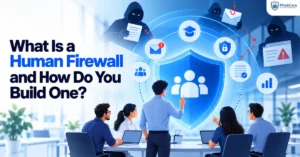
Protecting patient data in hospitals requires more than technical defenses. It requires a strong human layer of defense, where employees can recognise and respond to phishing attempts effectively. Understanding the risks and implementing proactive measures is essential for maintaining both cyber security and patient trust.
Why Hospitals Are Prime Targets for Phishing
Hospitals are attractive targets for cybercriminals for several reasons. First, they store highly sensitive data that has significant value on the black market. Medical records can be used for identity theft, insurance fraud, and other malicious activities.
Second, hospitals operate in high-pressure environments. Doctors, nurses, and administrative staff must manage patient care, coordinate with multiple departments, and respond quickly to communication. This urgency makes it easier for attackers to exploit human behaviour through phishing emails.
Third, hospitals rely on extensive communication with external parties. Medical suppliers, insurance companies, laboratories, and regulatory bodies frequently exchange information with hospital staff. This creates opportunities for attackers to impersonate legitimate contacts. These factors combined make hospitals particularly vulnerable to phishing attacks.
Common Phishing Scenarios in Hospitals
Phishing attacks in hospitals often mimic routine workflows to appear credible.
Attackers may send emails that appear to be from internal IT teams requesting password resets or system updates. These messages often include links to fake login pages designed to capture credentials.
Another common scenario involves impersonation of medical suppliers. Attackers may send emails requesting urgent approval of invoices or changes to payment details.
Phishing emails may also appear to relate to patient records, laboratory results, or appointment scheduling. In a busy hospital environment, such messages can seem legitimate and require immediate attention. Because these emails align with daily operations, employees may interact with them without verifying their authenticity.
The Impact of Phishing on Patient Data
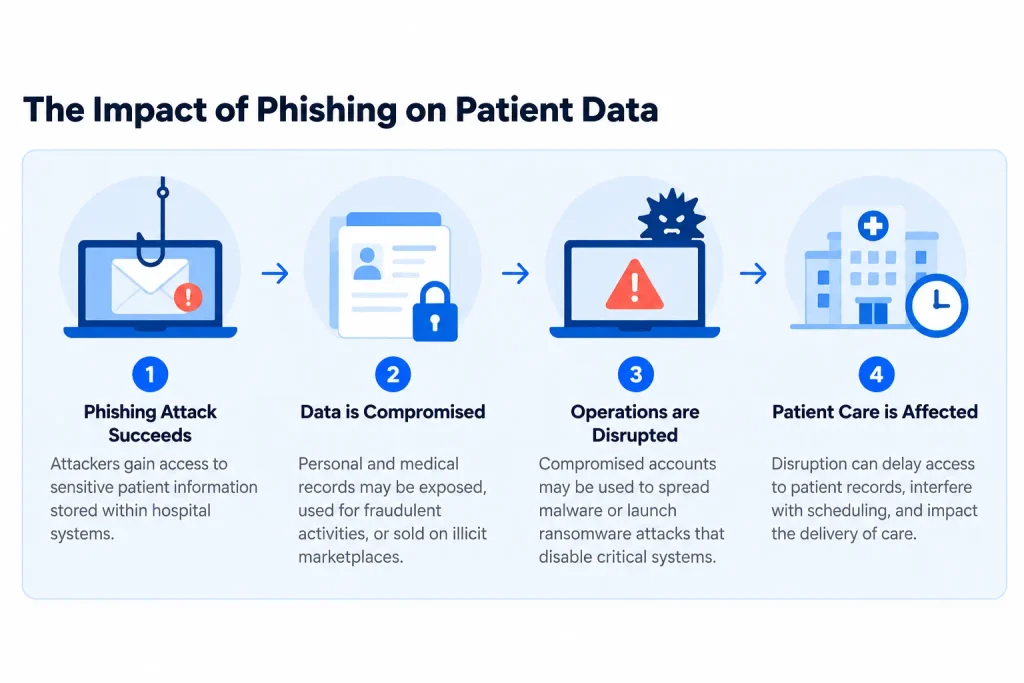
When a phishing attack succeeds, attackers may gain access to sensitive patient information stored within hospital systems. This can lead to data breaches that expose personal and medical records.
Compromised data may be used for fraudulent activities or sold on illicit marketplaces. Patients affected by such breaches may face identity theft or financial loss.
Beyond data exposure, phishing attacks can disrupt hospital operations. Compromised accounts may be used to spread malware or launch ransomware attacks that disable critical systems.
Operational disruption can delay access to patient records, interfere with scheduling, and impact the delivery of care. The combined effect of data compromise and operational disruption makes phishing a serious risk for healthcare organisations.
Regulatory and Compliance Challenges
Hospitals must comply with strict data protection regulations designed to safeguard patient information. When phishing attacks lead to data breaches, organisations may be required to notify regulators and affected individuals.
Failure to protect sensitive data can result in regulatory penalties and increased scrutiny. Compliance requirements add another layer of complexity to managing cyber risk in healthcare environments. Demonstrating proactive measures, such as employee awareness training and risk management practices, is essential for meeting these regulatory expectations.
Strengthening Hospital Defenses Against Phishing
Reducing phishing risk in hospitals requires a combination of technical and behavioural strategies.
Employees must be trained to recognise suspicious emails and understand common phishing tactics. Awareness training should focus on practical examples relevant to healthcare workflows.
Verification processes are also important. Staff should confirm unusual requests, particularly those involving patient data or financial transactions, before taking action.
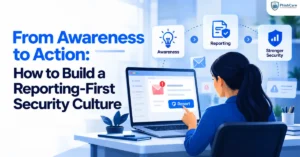
Multi-factor authentication adds an additional layer of protection by reducing the impact of compromised credentials. Encouraging a strong reporting culture ensures that suspicious emails are escalated quickly, allowing security teams to respond before the attack spreads.
Enhancing Awareness Through PhishCare
Practical exposure to realistic phishing scenarios is essential for strengthening awareness among hospital staff. PhishCare supports healthcare organisations through structured phishing simulation campaigns that reflect modern attack techniques.
These simulations replicate scenarios commonly seen in hospitals, including impersonation of internal departments, supplier communications, and messages related to patient data. By encountering these simulations, employees gain experience identifying suspicious patterns in a controlled environment.
When an employee interacts incorrectly with a simulated phishing email, PhishCare provides immediate feedback explaining the warning signs that were missed. This moment-based learning reinforces awareness and improves future decision-making.
PhishCare also provides behavioural reporting insights that allow hospitals to track improvements in employee vigilance over time. These insights help identify high-risk areas and guide targeted training efforts. By combining realistic simulation with continuous reinforcement, hospitals can strengthen their human firewall and reduce the risk of phishing-related incidents.
Protecting Patient Trust in a Digital Environment
Patient trust is a fundamental component of healthcare. Individuals expect their personal and medical information to be handled securely and responsibly.
Phishing attacks that lead to data breaches can undermine this trust and damage the reputation of healthcare institutions. Protecting patient data is therefore not only a regulatory requirement but also a critical aspect of maintaining confidence in healthcare services.
By investing in awareness, training, and proactive risk management, hospitals can strengthen their defenses and protect both their systems and their patients.
Frequently Asked Questions
1. Why are phishing attacks common in hospitals?
Hospitals are targeted because they store valuable patient data, operate in fast-paced environments, and rely on extensive communication with external parties.
2. What types of phishing emails target hospital staff?
Common examples include fake IT alerts, supplier invoice requests, patient record notifications, and credential harvesting emails.
3. How can hospitals protect patient data from phishing attacks?
Hospitals can reduce risk through employee awareness training, phishing simulations, strong authentication measures, and clear verification processes.
4. What happens if patient data is compromised in a phishing attack?
Data breaches can lead to identity theft, regulatory penalties, reputational damage, and disruption to hospital operations.
5. Why is employee awareness important in healthcare cyber security?
Because phishing attacks target human behaviour, employees who can recognise and report suspicious emails play a critical role in preventing incidents.
Content Reviewed By

Nawaz is a practising security analyst specializing in phishing simulation campaigns, employee awareness assessments, red team exercises, and ethical hacking. He leads phishing simulation deployments at PhishCare, a product developed by CyberSapiens, with hands-on experience evaluating and deploying phishing simulation tools across organizations in multiple industries and regions globally.
View LinkedIn ProfileStrengthen Your Hospital’s Phishing Awareness
Help your employees recognise phishing threats before they put sensitive patient data and healthcare operations at risk.
Get Started with PhishCare