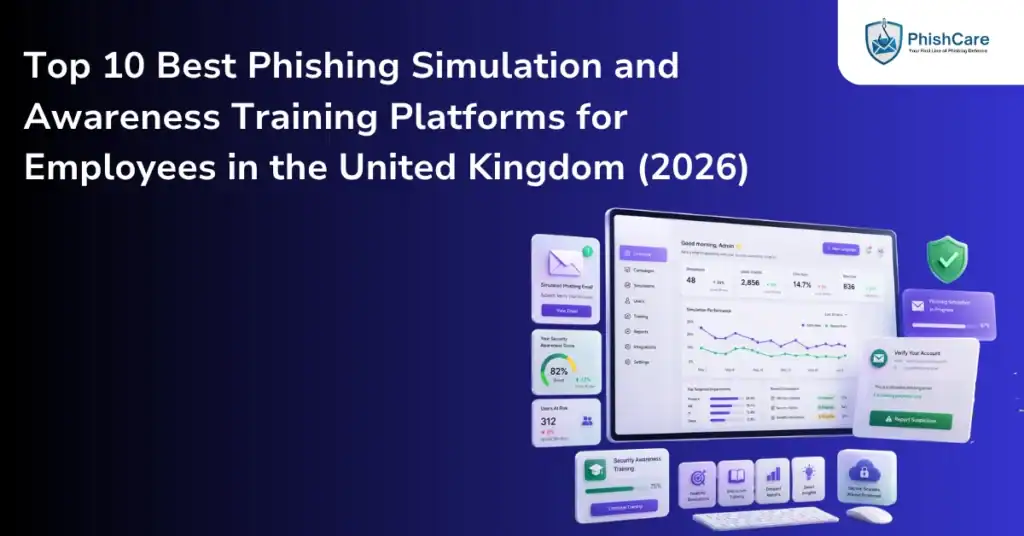
Phishing attacks targeting employees in the United Kingdom continue to evolve rapidly in 2026. Organizations across finance, healthcare, education, logistics, retail, and professional services are facing increasingly sophisticated credential theft campaigns, business email compromise attempts, QR phishing attacks, and Microsoft 365 impersonation scams.
As phishing threats become more convincing and AI-assisted social engineering techniques grow more advanced, many UK businesses are investing in phishing simulation and awareness training platforms to strengthen employee security awareness and reduce human-related cyber risk.
This guide explores the top phishing simulation and phishing awareness software platforms for employees in the United Kingdom in 2026, including what features matter most, how organizations evaluate these platforms, and what security teams should consider before choosing a long-term employee phishing testing solution.
Why UK Organizations Are Expanding Employee Phishing Testing Programs in 2026
Many organizations are moving beyond annual awareness sessions and adopting recurring phishing simulation programs that continuously assess employee behavior, reinforce awareness training, and provide measurable reporting insights for internal security teams.
Continuous Employee Risk Assessment
Organizations increasingly use recurring phishing simulations to evaluate employee susceptibility trends and identify departments requiring additional awareness reinforcement.
UK Compliance Awareness Initiatives
Phishing awareness programs and simulation reporting can provide an additional documentation boost for organizations aligning with ISO 27001, SOC 2 Type II, PCI DSS, HIPAA, and NIST CSF awareness best practices.
Behavioral Awareness Reporting
Modern phishing awareness software helps security teams measure employee engagement, simulation response patterns, reporting behavior, and long-term awareness improvement.
How We Evaluated Employee Phishing Testing and Awareness Training Platforms
Choosing phishing awareness software is no longer just about sending simulated phishing emails. Modern organizations increasingly evaluate platforms based on reporting visibility, campaign realism, automation capabilities, employee engagement, administrative simplicity, and long-term awareness improvement.
For this 2026 United Kingdom guide, we focused on the practical capabilities organizations typically consider when evaluating phishing simulation and employee awareness training platforms across SMB, mid-market, enterprise, healthcare, finance, education, and regulated industries.
Simulation Realism
We evaluated how effectively platforms replicate modern phishing tactics, including credential harvesting, impersonation attacks, QR phishing campaigns, attachment-based lures, and Microsoft 365-themed phishing simulations.
Awareness Training Experience
Effective phishing awareness software should support continuous employee education through interactive awareness content, micro-learning reinforcement, campaign-based learning, and measurable engagement tracking.
Reporting and Analytics
Security teams increasingly prioritize reporting visibility, employee risk trends, department-level insights, click tracking, reporting behavior analysis, and audit-friendly phishing simulation documentation.
Automation and Scalability
Organizations managing distributed or hybrid workforces often require automation capabilities that simplify recurring phishing campaigns, awareness scheduling, employee grouping, and long-term program management.
UK Compliance Alignment
Many UK organizations also evaluate phishing simulation platforms based on how awareness reporting supports broader internal security governance and compliance awareness initiatives.
Administrative Simplicity
Security awareness programs are more sustainable when platforms simplify campaign deployment, reduce manual overhead, and make reporting easier for internal IT and security teams to interpret.
The platforms discussed in this guide are evaluated from a practical organizational perspective based on phishing simulation capabilities, awareness program effectiveness, reporting visibility, scalability, and long-term employee security awareness management considerations.
Top Employee Phishing Testing and Awareness Platform Features Compared
Organizations evaluating phishing awareness software often compare platforms based on simulation realism, reporting visibility, automation capabilities, awareness reinforcement, scalability, and operational simplicity. The sections below highlight the key capabilities businesses typically evaluate when selecting an employee phishing testing platform in 2026.
Phishing Simulation Realism
Modern phishing simulations should closely replicate real-world attack techniques employees commonly encounter in business environments.
Credential harvesting simulations, QR phishing campaigns, impersonation attacks, Microsoft 365 phishing simulations, and attachment-based phishing lures.
Awareness Training Experience
Continuous awareness reinforcement helps employees identify suspicious behavior patterns and improve phishing recognition over time.
Micro-learning modules, interactive awareness content, post-click education, and recurring awareness reinforcement programs.
Reporting and Analytics
Organizations increasingly prioritize platforms that provide measurable visibility into employee engagement and phishing response trends.
Behavioral analytics, click tracking, reporting dashboards, downloadable reports, and department-level awareness insights.
Automation and Scalability
Automation capabilities help organizations manage recurring phishing simulations more efficiently across distributed workforces.
Scheduled phishing campaigns, automated reporting, user grouping, centralized administration, and enterprise scalability support.
Compliance Awareness Support
Many organizations also evaluate phishing awareness software based on how reporting supports broader governance and security awareness initiatives.
Audit-friendly reporting visibility, awareness participation tracking, recurring simulation documentation, and employee awareness monitoring.
Administrative Simplicity
Employee awareness programs become easier to manage when phishing simulation platforms reduce operational complexity.
Simplified deployment workflows, intuitive dashboards, centralized management, and streamlined reporting visibility.
Why Organizations Are Prioritizing Continuous Employee Phishing Testing
Many businesses are shifting from annual awareness sessions to recurring phishing simulations that continuously evaluate employee behavior, reinforce awareness training, and provide measurable visibility into long-term security awareness improvement.
PhishCare by CyberSapiens
PhishCare is a phishing simulation and employee security awareness training platform developed by CyberSapiens. The platform helps organizations run realistic phishing simulations, reinforce employee awareness training, monitor engagement trends, and strengthen human-layer cybersecurity resilience through recurring phishing awareness programs.
Realistic Phishing Simulation Campaigns
Organizations can run phishing simulations that replicate common credential theft tactics, impersonation attacks, QR phishing scenarios, attachment-based phishing, and business email compromise techniques.
Behavioral Reporting and Awareness Insights
The platform provides visibility into employee engagement trends, phishing response behavior, awareness participation, reporting patterns, and recurring simulation performance.
Continuous Employee Awareness Reinforcement
Recurring awareness campaigns and phishing testing workflows help organizations reinforce security awareness beyond one-time training sessions.
Scalable Awareness Program Management
PhishCare supports organizations managing hybrid workforces, multiple departments, distributed teams, and recurring awareness initiatives at scale.
Security Awareness Reporting and Compliance Visibility
PhishCare’s phishing simulation reports can provide an additional documentation boost for organizations aligning with ISO 27001, SOC 2 Type II, PCI DSS, HIPAA, and NIST CSF awareness best practices, where ongoing employee security awareness training is commonly recognized as part of broader governance and risk management initiatives.
Managed vs DIY Employee Phishing Testing Programs
Organizations implementing phishing awareness software often evaluate whether to manage phishing simulation campaigns internally or adopt a more guided and managed approach. The right model usually depends on internal security resources, campaign frequency, reporting requirements, and long-term awareness program goals.
Internally Managed Phishing Simulations
Some organizations prefer managing phishing simulation campaigns internally using their own IT or security teams. This approach may provide greater control over scheduling and campaign customization, especially for organizations with dedicated cybersecurity personnel.
Greater internal control over phishing campaign scheduling and configuration.
Suitable for organizations with mature internal security awareness teams.
May require additional administrative effort for recurring campaign management and reporting interpretation.
Guided Phishing Awareness Program Management
Many organizations prefer a managed or guided phishing simulation approach that simplifies recurring awareness campaigns, reporting analysis, awareness reinforcement, and operational coordination.
Helps reduce operational overhead for recurring phishing simulations and awareness workflows.
Supports organizations with limited internal security awareness management resources.
Provides more consistent phishing testing cadence, awareness reinforcement, and reporting visibility.
Why Many Organizations Are Moving Toward Continuous Awareness Programs
Organizations increasingly recognize that phishing awareness is most effective when employee testing and awareness reinforcement happen continuously rather than through isolated annual training sessions.
Recurring phishing simulations, ongoing awareness education, and measurable behavioral reporting help organizations maintain stronger visibility into employee security awareness maturity over time.
How Organizations Use Employee Phishing Testing Platforms in 2026
Phishing awareness software is increasingly being used across industries to improve employee awareness, strengthen reporting behavior, reinforce cybersecurity culture, and provide measurable visibility into human-layer security risks.
Security Awareness Visibility
IT and security teams commonly use phishing simulation platforms to evaluate employee response behavior, identify recurring awareness gaps, and strengthen incident reporting culture across departments.
Employee Awareness Reinforcement
Organizations often integrate phishing awareness initiatives into broader employee education programs to reinforce cybersecurity awareness throughout onboarding and recurring training cycles.
Awareness Reporting Documentation
Many organizations use phishing simulation reporting as part of broader awareness governance initiatives supporting internal security programs and compliance readiness efforts.
Distributed Employee Awareness Programs
Distributed workforces often require recurring phishing simulations and scalable awareness programs that can support multiple teams, locations, and operational environments.
Simplified Awareness Management
Small and mid-sized businesses often prioritize platforms that simplify recurring phishing testing, reduce administrative complexity, and improve visibility into employee awareness maturity.
Scalable Security Awareness Operations
Larger organizations often require centralized awareness visibility, multi-department reporting, automation workflows, and recurring phishing simulation scalability.
Explore How PhishCare Helps Organizations Strengthen Employee Security Awareness
PhishCare helps organizations run recurring phishing simulations, improve employee awareness visibility, reinforce cybersecurity education, and simplify awareness reporting workflows.
How to Choose the Right Employee Phishing Testing Platform
Selecting the right phishing awareness software depends on organizational size, security maturity, reporting requirements, administrative resources, and long-term awareness goals. While many platforms provide phishing simulation functionality, organizations often evaluate several additional operational and strategic considerations before implementation.
Evaluate Simulation Realism
Organizations should evaluate whether phishing simulations realistically reflect modern attack techniques employees commonly encounter, including impersonation scams, credential theft attempts, QR phishing, and Microsoft 365 phishing campaigns.
Review Reporting Visibility
Behavioral analytics, reporting dashboards, awareness participation tracking, and downloadable reporting visibility are increasingly important for security teams managing awareness programs.
Assess Administrative Simplicity
Organizations often prefer platforms that simplify recurring phishing campaigns, reduce operational overhead, and make long-term awareness management easier for internal teams.
Consider Scalability Requirements
Distributed workforces and enterprise environments often require centralized reporting, recurring campaign automation, department-level visibility, and scalable awareness program management.
Align Awareness Goals
Organizations should evaluate whether the platform supports long-term awareness reinforcement strategies instead of relying only on isolated phishing campaigns.
Review Compliance Reporting Needs
Many organizations also evaluate whether awareness reporting can support broader internal governance initiatives and recurring security awareness documentation efforts.
Continuous Awareness Programs Are Becoming the New Standard
Organizations across the United Kingdom increasingly view phishing awareness as an ongoing operational initiative rather than a one-time training activity. Recurring phishing simulations, awareness reinforcement, and employee reporting visibility are becoming core components of modern cybersecurity awareness programs.
Frequently Asked Questions About Employee Phishing Testing Platforms
Organizations evaluating phishing awareness software often have questions related to awareness reporting, simulation frequency, employee training strategies, compliance visibility, and long-term awareness program management.
What is phishing simulation software?
Phishing simulation software helps organizations test and improve employee security awareness through controlled phishing campaigns, awareness reinforcement, employee engagement tracking, and behavioral reporting visibility.
How often should organizations run phishing simulations?
Many organizations now run recurring phishing simulations throughout the year rather than relying only on annual awareness exercises. The ideal frequency typically depends on organizational size, employee risk exposure, industry requirements, and awareness maturity goals.
Why are phishing simulations important for employee awareness programs?
Phishing simulations help organizations reinforce practical employee awareness by exposing users to realistic attack scenarios, improving reporting behavior, and identifying awareness gaps that may require additional training reinforcement.
Can phishing simulation reports support compliance awareness initiatives?
Phishing simulation reporting can provide an additional documentation boost for organizations supporting broader awareness initiatives related to ISO 27001, SOC 2 Type II, PCI DSS, HIPAA, and NIST CSF awareness best practices.
What features should organizations look for in phishing awareness software?
Organizations commonly evaluate phishing awareness platforms based on simulation realism, reporting visibility, automation capabilities, employee engagement tracking, scalability, and administrative simplicity.
How does PhishCare help organizations improve employee security awareness?
PhishCare helps organizations run recurring phishing simulations, reinforce employee awareness training, monitor engagement trends, improve reporting visibility, and simplify long-term phishing awareness program management.

Mohammed Nawaz Sajjad
Nawaz is a practising security analyst specializing in phishing simulation campaigns, employee awareness assessments, red team exercises, phishing risk evaluation, and ethical hacking.
He works closely with organizations evaluating and deploying phishing awareness software programs across multiple industries and operational environments. His experience includes phishing simulation workflows, awareness reporting analysis, employee risk visibility, and recurring phishing testing strategies designed to improve long-term security awareness maturity.
Explore How PhishCare Helps Organizations Run Continuous Phishing Awareness Programs
PhishCare by CyberSapiens helps organizations run recurring phishing simulations, reinforce employee awareness training, improve reporting visibility, and strengthen human-layer cybersecurity resilience through scalable awareness programs.
Continuous phishing awareness reinforcement helps organizations strengthen long-term employee awareness maturity.
Support distributed teams, hybrid workforces, and enterprise awareness initiatives with scalable phishing simulation workflows.
Gain visibility into employee engagement trends, phishing response behavior, and awareness participation reporting.