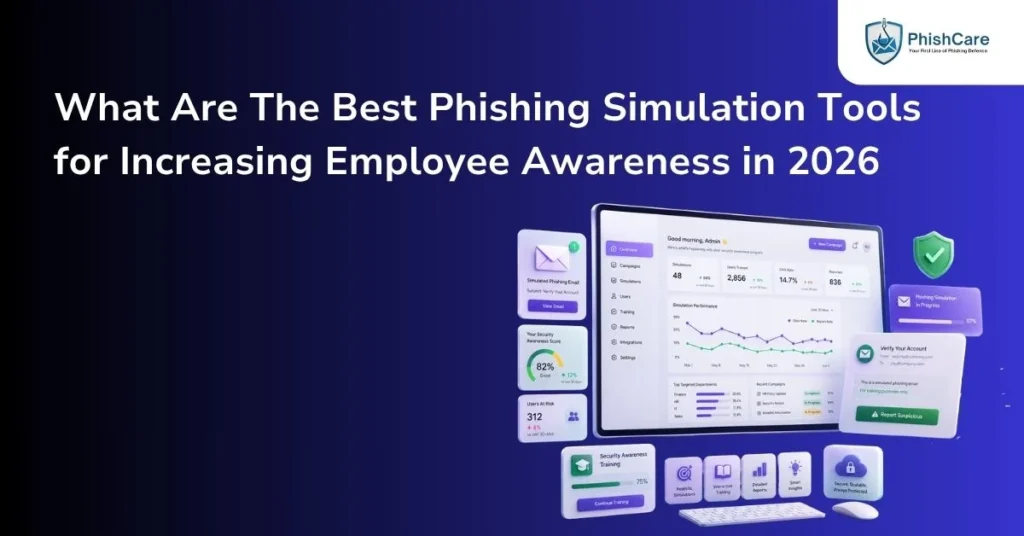
Best Phishing Simulation Tools for Increasing Employee Awareness in 2026
Modern phishing attacks are increasingly AI-generated, personalized, and difficult for employees to identify. Organizations now require more than annual awareness sessions. They need realistic phishing simulation platforms that continuously test employee behavior, measure risk exposure, and improve long-term security awareness across departments.
In this guide, we compare the best phishing simulation tools based on reporting capabilities, campaign realism, automation, scalability, compliance reporting support, and deployment flexibility for modern security teams.
Hands-on phishing awareness campaigns delivered across finance, IT, healthcare, and banking environments.
Organizations using recurring phishing simulations reported measurable improvements in employee vigilance and reporting behavior.
PhishCare phishing simulation programs support distributed teams and awareness initiatives across multiple business regions.
Trusted by Organizations Running Real-World Phishing Simulations
PhishCare, developed by CyberSapiens, helps organizations test employee awareness through realistic phishing campaigns, reporting dashboards, and recurring simulation workflows designed for long-term behavioral improvement.
PhishCare campaign reports provide an additional documentation boost for organizations working towards ISO 27001, SOC 2 Type II, PCI DSS, HIPAA, or NIST CSF, where ongoing security awareness training is recognized as a best practice by auditors and certification bodies.
“We recently used PhishCare for a phishing simulation, and their email templates were top-notch. The realism and variety of the templates were impressive, really testing our team’s vigilance.”
Why Employee Phishing Awareness Still Fails in Many Organizations
Many organizations invest in awareness training, yet phishing attacks continue to succeed because employees are now facing increasingly sophisticated social engineering tactics, AI-generated emails, and highly personalized impersonation attacks. Traditional once-a-year training sessions are no longer enough to improve long-term employee vigilance.
Modern phishing campaigns increasingly use AI tools to create convincing emails with realistic grammar, tone, branding, and personalization. Employees often struggle to distinguish these emails from legitimate communication.
Employees often forget security awareness lessons when training is conducted only once per year. Without recurring phishing simulations and reinforcement, awareness levels gradually decline over time.
Attackers now tailor phishing messages using employee roles, public information, vendor names, and internal terminology, making phishing attempts appear highly authentic and contextually relevant.
Many organizations deliver awareness content without testing actual employee behavior. Phishing simulation platforms help identify risky user actions, repeat offenders, and departments requiring additional awareness training.
Why Continuous Phishing Simulations Matter
Organizations that regularly conduct phishing simulations are better positioned to identify awareness gaps, reduce risky employee behavior, and improve long-term security culture across teams.
Recurring phishing assessments also provide measurable reporting that security teams can use to track awareness improvements, department-level risk exposure, and employee reporting behavior over time.
PhishCare phishing simulation campaigns have supported organizations across finance, healthcare, IT, and banking sectors with realistic testing scenarios and employee awareness assessments.
How We Evaluated These Phishing Simulation Tools
Not every phishing simulation platform delivers the same level of realism, reporting depth, automation, or operational flexibility. To identify the best phishing simulation tools for employee awareness training in 2026, we evaluated platforms based on practical deployment factors that security teams commonly prioritize during real-world phishing simulation programs.
We assessed how realistically each platform could simulate phishing emails, credential harvesting attempts, executive impersonation attacks, and vendor-themed phishing campaigns.
We reviewed reporting dashboards, click tracking, credential submission metrics, user risk visibility, awareness trend reporting, and executive-level reporting capabilities.
Platforms were evaluated based on campaign automation, recurring simulation workflows, user grouping, phishing template rotation, and long-term scheduling flexibility.
We considered onboarding simplicity, domain configuration requirements, email delivery setup, administrative usability, and deployment suitability for different organization sizes.
We evaluated whether platforms could support distributed teams, multiple departments, large employee groups, and recurring phishing awareness initiatives at scale.
We reviewed whether reporting workflows could support organizations working towards frameworks such as ISO 27001, SOC 2 Type II, HIPAA, PCI DSS, and NIST CSF.
Practical Evaluation Based on Real Campaign Operations
Our evaluation framework is based on hands-on phishing simulation deployment experience across organizations in finance, healthcare, IT, and banking sectors. Instead of focusing only on feature lists, we prioritized usability, operational efficiency, reporting quality, and long-term awareness improvement.
PhishCare, developed by CyberSapiens, has supported more than 3000 phishing simulation campaigns globally, helping organizations identify employee risk exposure and improve security awareness over time.
- Email realism and phishing template quality
- Employee behavior tracking and reporting
- Campaign automation and scheduling
- Scalability for enterprise awareness programs
- Compliance-friendly reporting workflows
Best Phishing Simulation Tools Compared for 2026
Different phishing simulation platforms are designed for different organizational needs. Some focus heavily on enterprise automation, while others prioritize awareness training, integrations, or customizable phishing templates. The comparison below highlights key differences security teams commonly evaluate before selecting a phishing simulation platform.
| Platform | Best For | Reporting | Automation | Template Quality |
|---|---|---|---|---|
| PhishCare | Recurring employee phishing simulations and awareness programs | Detailed dashboards and awareness tracking | Recurring campaign scheduling and workflow flexibility | Realistic phishing templates with customizable scenarios |
| KnowBe4 | Large-scale enterprise awareness programs | Enterprise-focused analytics and reporting | Advanced automation capabilities | Large phishing template library |
| Hoxhunt | Gamified awareness experiences | Behavior-focused awareness analytics | Automated phishing learning paths | Adaptive phishing content |
| Cofense | Threat reporting and enterprise phishing response | Incident-focused reporting workflows | Enterprise campaign automation | Enterprise phishing scenarios |
| GoPhish | Custom phishing testing environments | Basic phishing reporting | Manual campaign management | Customizable open-source templates |
Choosing the Right Phishing Simulation Platform
The best phishing simulation software depends on your organization’s awareness maturity, reporting requirements, deployment scale, and internal security operations. Some teams prioritize automation and enterprise integrations, while others focus more on realistic phishing templates and recurring awareness testing.
Organizations running ongoing awareness programs often benefit most from platforms that combine realistic phishing simulations, measurable reporting, recurring campaign workflows, and executive visibility into employee risk trends.
- Realistic phishing email templates
- Recurring phishing automation
- Detailed awareness reporting dashboards
- Department-level risk visibility
- Compliance-friendly reporting support
Why Organizations Choose PhishCare for Employee Awareness Programs
PhishCare, developed by CyberSapiens, is designed to help organizations run realistic phishing simulations, measure employee awareness levels, and strengthen long-term security behavior through recurring awareness campaigns and actionable reporting insights.
Built for Real-World Phishing Simulation Operations
PhishCare supports organizations running recurring phishing simulations across multiple departments, teams, and business units. The platform focuses on realistic phishing templates, awareness tracking, reporting visibility, and operational simplicity for security teams.
Organizations use PhishCare to identify risky employee behavior, reduce phishing click rates, improve reporting culture, and maintain ongoing awareness programs that evolve with modern phishing threats.
Simulation campaigns delivered across finance, healthcare, IT, and banking sectors globally.
Organizations running recurring phishing simulations observed measurable employee awareness improvements over time.
Realistic Phishing Templates
PhishCare campaigns are designed with realistic phishing scenarios that closely resemble modern business email attacks, credential harvesting attempts, and impersonation campaigns.
Recurring Awareness Campaigns
Security teams can run scheduled phishing simulations throughout the year to continuously reinforce awareness and reduce long-term employee risk exposure.
Awareness Reporting and Analytics
Detailed dashboards help organizations track employee clicks, credential submissions, reporting behavior, and department-level phishing risk trends.
Compliance Awareness Support
PhishCare reporting workflows provide an additional documentation boost for organizations working toward ISO 27001, SOC 2 Type II, HIPAA, PCI DSS, and NIST CSF awareness initiatives.
Organizations That Have Used PhishCare
PhishCare phishing simulation campaigns have supported organizations across finance, IT, healthcare, and enterprise environments globally.









Key Features to Look for in a Phishing Simulation Platform
Choosing the right phishing simulation software involves more than comparing template libraries or dashboards. Security teams should evaluate how effectively a platform can improve employee awareness, automate recurring campaigns, measure behavioral risk, and support long-term phishing resilience across the organization.
Realistic Phishing Email Templates
Modern phishing attacks often imitate vendors, executives, HR teams, and cloud services. Effective phishing simulation tools should provide realistic templates that accurately reflect real-world attack techniques employees encounter daily.
Recurring Campaign Automation
Organizations benefit most from phishing simulations when campaigns run continuously throughout the year. Automation features help security teams schedule recurring simulations without manual intervention.
Employee Risk Analytics
Detailed reporting dashboards should track employee clicks, credential submissions, reporting rates, repeat offenders, and department-level awareness trends over time.
Customizable Simulation Scenarios
Security teams often require phishing templates customized for internal departments, industries, seasonal campaigns, or region-specific attack patterns. Flexible customization improves realism and awareness effectiveness.
Compliance-Friendly Reporting
Organizations working toward ISO 27001, SOC 2 Type II, HIPAA, PCI DSS, or NIST CSF often benefit from phishing simulation reporting that supports awareness documentation and audit preparation workflows.
Scalability Across Teams
Enterprise organizations often require phishing simulation platforms capable of managing large employee groups, distributed workforces, and recurring awareness initiatives across multiple business units.
Why Reporting Visibility Matters in Employee Awareness Programs
One of the most valuable capabilities of a phishing simulation platform is the ability to measure awareness progress over time. Without reporting visibility, organizations often struggle to identify vulnerable departments, risky employee behavior, or awareness gaps that require additional training.
Platforms such as PhishCare help security teams monitor phishing trends, track simulation outcomes, and generate executive-ready reports that support long-term awareness strategies and operational decision-making.
- Credential harvesting simulations
- Employee click tracking and reporting
- Department-level awareness analysis
- Recurring phishing campaign workflows
- Executive awareness reporting dashboards
Common Mistakes Organizations Make During Phishing Simulations
Phishing simulations are most effective when they improve awareness without creating confusion, frustration, or unrealistic testing conditions. Many organizations unintentionally reduce the effectiveness of their awareness programs by using poor campaign strategies, inconsistent reporting, or overly aggressive phishing scenarios.
Employees quickly recognize poorly written or unrealistic phishing emails, which reduces the value of the simulation. Effective awareness testing should closely resemble modern phishing attacks employees may actually encounter.
Awareness levels decline over time when phishing simulations are conducted infrequently. Organizations typically see stronger long-term awareness improvements when simulations are recurring and continuous.
Organizations often focus on identifying employee clicks without providing additional awareness guidance afterward. Simulations should reinforce learning and help employees understand how to identify future phishing attempts.
Different departments face different phishing risks. HR, finance, procurement, and executive teams are often targeted differently, making role-based phishing scenarios more effective than generic campaigns.
Without analyzing simulation data, organizations miss valuable awareness insights. Reporting dashboards help identify repeat offenders, risky departments, and awareness trends that require additional attention.
Extremely deceptive or punitive phishing simulations can damage employee trust and reduce participation. Awareness programs should focus on education and long-term behavior improvement rather than punishment.
What Effective Phishing Awareness Programs Typically Include
Successful phishing awareness programs are usually structured around realistic phishing templates, recurring campaigns, employee reporting workflows, and measurable awareness improvement tracking.
Platforms such as PhishCare help organizations maintain continuous awareness testing while providing reporting visibility that security teams can use to improve employee resilience against evolving phishing threats.
- Use realistic phishing attack scenarios
- Conduct recurring phishing simulations
- Track awareness improvements over time
- Provide post-simulation awareness guidance
- Review department-level phishing risks
How Recurring Phishing Simulations Improve Security Culture
Security awareness is not a one-time activity. Organizations that conduct recurring phishing simulations often develop stronger employee vigilance, better reporting habits, and a more proactive security culture over time. Continuous phishing awareness programs help reinforce behavioral learning through realistic testing and measurable feedback.
Why Continuous Awareness Reinforcement Matters
Employees are constantly exposed to evolving phishing attacks, including AI-generated emails, credential harvesting attempts, invoice scams, executive impersonation campaigns, and cloud-service phishing pages. Awareness programs become more effective when employees encounter realistic simulations regularly instead of only during annual training sessions.
Recurring phishing simulations help employees recognize suspicious email patterns, verify unexpected requests, and develop safer decision-making habits during day-to-day business operations.
Over time, organizations often observe lower phishing click rates, improved employee reporting behavior, and stronger internal awareness across departments.
Organizations using recurring phishing simulations through PhishCare reported measurable awareness improvement across employee groups over time.
Hands-on phishing simulation experience across finance, healthcare, IT, and banking sectors globally.
Reduced Employee Click Rates
Employees exposed to recurring phishing simulations often become more cautious when interacting with suspicious links, attachments, and impersonation emails.
Improved Threat Reporting Culture
Regular simulations encourage employees to report suspicious emails more confidently, helping security teams identify potential threats earlier.
Department-Level Awareness Visibility
Security teams can identify departments or employee groups that require additional awareness reinforcement based on reporting and simulation outcomes.
Audit and Awareness Documentation Support
PhishCare reporting workflows provide an additional documentation boost for organizations supporting awareness initiatives related to ISO 27001, SOC 2 Type II, HIPAA, PCI DSS, and NIST CSF programs.
Strengthen Employee Awareness with Recurring Phishing Simulations
Explore how PhishCare helps organizations run realistic phishing simulations, improve awareness reporting, and reduce employee phishing risk exposure over time.
Trusted by Organizations Running Real-World Phishing Simulations
PhishCare phishing simulation campaigns have supported organizations across finance, healthcare, IT, banking, and enterprise environments. Security teams use recurring phishing simulations to improve employee awareness, reduce risky behavior, and strengthen internal reporting culture over time.
Security Teams Need More Than One-Time Awareness Training
Modern phishing threats evolve rapidly, which is why organizations increasingly rely on recurring phishing simulations instead of annual awareness sessions alone. Continuous phishing testing helps reinforce safer employee behavior and provides measurable awareness visibility across departments.
PhishCare helps organizations conduct realistic phishing campaigns, monitor employee risk exposure, and strengthen awareness programs through recurring simulation workflows and reporting analytics.
“We recently used PhishCare for a phishing simulation, and I’ve got to say, their email templates were top-notch. The realism and variety of the templates were impressive, really testing our team’s vigilance. The level of detail they put into crafting these emails was evident, making the simulation both challenging and effective. It’s clear they know their stuff when it comes to cybersecurity.”
Organizations That Have Used PhishCare
Organizations across multiple industries use PhishCare to run realistic phishing awareness simulations, recurring employee testing programs, and long-term awareness initiatives.
Frequently Asked Questions About Phishing Simulation Tools
Organizations evaluating phishing simulation platforms often have questions about reporting visibility, employee awareness effectiveness, deployment frequency, and compliance support. Below are answers to some of the most common phishing simulation questions security teams ask before selecting a platform.
What is a phishing simulation tool?
A phishing simulation tool helps organizations test employee awareness by sending realistic phishing emails in a controlled environment. These simulations help security teams identify risky user behavior, improve employee awareness, and measure phishing resilience across departments.
How often should phishing simulations be conducted?
Many organizations conduct phishing simulations monthly or quarterly to reinforce awareness consistently. Recurring phishing simulations are generally more effective than annual awareness testing because employees retain awareness habits through continuous reinforcement.
Can phishing simulations help reduce employee click rates?
Recurring phishing simulations often help employees become more cautious when handling suspicious emails, attachments, and login requests. Organizations commonly observe improved reporting behavior and reduced phishing interaction rates over time.
What features should a phishing simulation platform include?
Organizations often look for realistic phishing templates, recurring campaign automation, awareness reporting dashboards, employee risk analytics, customizable phishing scenarios, and compliance-friendly reporting workflows.
Are phishing simulation reports useful for compliance programs?
Phishing simulation reporting can provide an additional documentation boost for organizations working toward frameworks such as ISO 27001, SOC 2 Type II, HIPAA, PCI DSS, and NIST CSF, where ongoing employee awareness programs are recognized as a best practice.
How does PhishCare help improve employee phishing awareness?
PhishCare helps organizations run realistic phishing simulations, recurring awareness campaigns, and reporting-driven employee awareness programs designed to identify phishing risks and strengthen long-term security culture across teams.
Content Reviewed By

Mohammed Nawaz Sajjad
Nawaz is a practising security analyst specializing in phishing simulation campaigns, employee awareness assessments, red team exercises, and ethical hacking initiatives.
He leads phishing simulation deployments at PhishCare, a phishing simulation and awareness platform developed by CyberSapiens, with hands-on experience supporting organizations across finance, IT, healthcare, and banking sectors globally.
His work focuses on helping organizations identify employee phishing risks, strengthen internal reporting culture, and improve long-term awareness through recurring phishing simulations and measurable awareness reporting.
Run Realistic Phishing Simulations with PhishCare
PhishCare helps organizations strengthen employee awareness through recurring phishing simulations, realistic phishing templates, awareness reporting dashboards, and measurable security culture improvement workflows.
Explore how PhishCare supports organizations across finance, IT, healthcare, and banking sectors with scalable phishing awareness programs designed for long-term employee vigilance and operational visibility.
Hands-on phishing awareness campaigns delivered across enterprise environments globally.
Organizations running recurring phishing simulations observed measurable awareness improvements over time.
PhishCare supports phishing awareness initiatives across distributed teams and multiple business regions.