Healthcare organisations are among the most frequently targeted sectors in cyber attacks. Hospitals, clinics, insurance providers, and healthcare technology companies handle large volumes of sensitive patient information, financial data, and operational records. Because of this valuable data, attackers increasingly focus their efforts on healthcare environments.
However, the primary reason healthcare institutions are targeted is not just the data they hold. It is also the working environment in which healthcare staff operate. Doctors, nurses, administrative personnel, and support staff often work under intense pressure, managing critical tasks that directly affect patient care. In such environments, employees must respond quickly to emails, messages, and requests without delaying treatment or administrative processes.
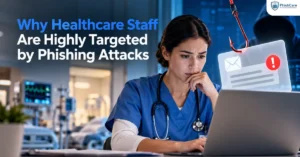
Cybercriminals exploit this urgency through phishing attacks. A phishing email that appears to come from a colleague, supplier, or internal system can easily blend into the daily communication flow within a healthcare organisation. When staff members respond quickly to what appears to be a legitimate message, attackers gain access to credentials, systems, or sensitive information.
Phishing attacks in healthcare can have serious consequences. Beyond financial loss and operational disruption, cyber incidents in healthcare environments can affect patient safety and trust. Understanding why healthcare staff are frequently targeted helps organisations strengthen their defenses and reduce cyber risk.
The Value of Healthcare Data
Healthcare data is highly valuable on the black market. Medical records contain detailed personal information, including names, addresses, dates of birth, insurance details, and medical history.
Unlike financial data, which can often be replaced or reset, medical records contain permanent information that cannot easily be changed. This makes them particularly attractive to cybercriminals.
Attackers may use stolen medical data for identity theft, insurance fraud, or resale on illicit marketplaces. Because of this high value, healthcare organisations are a frequent target for phishing campaigns designed to gain access to internal systems.
High-Pressure Work Environments
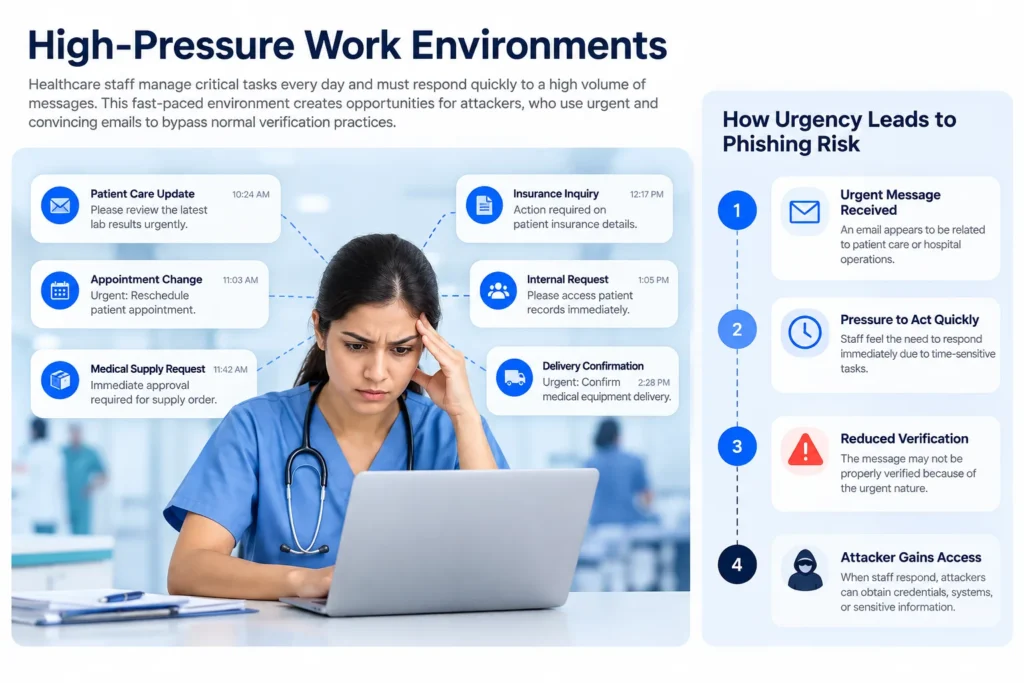
Healthcare staff often operate in fast-paced environments where rapid decision-making is essential. Doctors and nurses must respond quickly to messages about patient care, laboratory results, appointment schedules, and medical supply requests.
Why Urgency Creates Risk
This urgency creates an opportunity for attackers. Phishing emails that appear urgent or related to patient care may prompt employees to act quickly without verifying the message.
For example, an email requesting immediate access to patient records or urgent approval of a medical supply order may appear legitimate in a busy hospital setting. Attackers rely on this sense of urgency to bypass normal verification practices.
Large and Diverse Workforces
Healthcare organisations often employ large numbers of staff across multiple departments. Clinical teams, administrative staff, billing departments, laboratory technicians, and external partners all interact with digital systems.
More Employees Mean More Potential Entry Points
The larger the workforce, the greater the number of potential entry points for attackers. Each employee who interacts with email systems or digital records represents a possible target for phishing campaigns.
In addition, some staff members may not receive the same level of cyber security training as technical personnel, increasing the likelihood of successful phishing attempts.
Healthcare organisations can also face phishing risks across different roles and communication channels. Understanding how these risks affect hospitals and healthcare teams is important for building stronger employee awareness and reducing exposure to phishing threats. Organisations can explore more about phishing risks in hospitals and protecting patient data as part of a broader healthcare security awareness strategy.
Extensive Third-Party Communication
Healthcare operations involve constant communication with external organisations. Hospitals and clinics frequently exchange information with insurance providers, laboratories, medical suppliers, and government agencies.
Trusted Partners Can Become Phishing Targets
Because staff members regularly receive emails from external contacts, phishing emails that impersonate suppliers or partners may appear convincing.
Attackers often use this strategy by creating emails that mimic invoices, delivery confirmations, or insurance documentation.
When these messages appear to come from trusted partners, employees may interact with them without suspicion.
Legacy Systems and Technology Challenges
Many healthcare organisations rely on legacy systems and specialised medical software that cannot easily be replaced or upgraded. These systems may lack modern security features and require complex access procedures.
Credential Theft Can Expose Critical Systems
Attackers often target login credentials to access these systems through phishing emails that mimic legitimate system alerts or password reset notifications.
If employees unknowingly provide credentials through a phishing page, attackers may gain access to critical systems or sensitive patient data.
As phishing techniques become more sophisticated, organisations also need to understand how attackers are using newer technologies to make fraudulent messages appear more convincing. Learn more about how generative AI is changing phishing attacks in 2026 and why employee awareness remains an important layer of defence.
The Impact of Phishing Attacks on Healthcare
Phishing attacks in healthcare environments can have serious consequences beyond financial loss.
Operational Disruption and Patient Safety
Compromised systems may disrupt patient care, delay medical procedures, or prevent staff from accessing important records. In extreme cases, ransomware attacks initiated through phishing emails can temporarily disable hospital systems.
Data breaches can also lead to regulatory penalties and loss of patient trust. Healthcare organisations must comply with strict privacy regulations designed to protect sensitive health information.
Because of these risks, preventing phishing attacks is essential for maintaining both operational continuity and patient safety. As social engineering techniques continue to evolve, healthcare security teams should also remain aware of emerging threats such as AI voice cloning attacks and the next level of CEO fraud .
Strengthening Healthcare Security Through Awareness
Healthcare organisations can reduce phishing risk by strengthening employee awareness and encouraging secure communication practices. Staff members should be trained to recognise common phishing indicators, including unexpected requests for credentials, urgent financial instructions, or suspicious attachments.
Build Awareness Around Changing Phishing Risks
Verification procedures should also be encouraged for unusual requests, particularly those involving sensitive patient information or financial transactions. Regular awareness reinforcement helps employees remain vigilant even in fast-paced work environments.
Employee awareness becomes even more important as phishing techniques adapt to different working environments and communication patterns. Organisations can also review phishing threats in remote work environments to understand how changing workplace communication can create additional opportunities for social engineering attacks.
Supporting Healthcare Awareness Programs With PhishCare
Practical exposure to realistic attack scenarios can significantly improve phishing awareness among healthcare staff. PhishCare, developed by CyberSapiens, supports healthcare organisations through structured phishing simulation campaigns designed to reflect modern attack techniques.
These simulations replicate common phishing scenarios such as impersonation attempts, urgent internal communications, and messages that appear related to medical operations. By encountering these scenarios in a controlled environment, employees gain experience identifying suspicious messages before real incidents occur.
When an employee interacts incorrectly with a simulated phishing email, PhishCare provides immediate feedback explaining the warning signs they may have missed. This moment-based learning helps reinforce awareness and strengthen threat recognition.
PhishCare also provides behavioural reporting insights that allow healthcare organisations to monitor improvements in employee vigilance over time. These insights help security teams identify high-risk areas and reinforce training where it is most needed. By combining realistic simulations with continuous awareness reinforcement, healthcare organisations can strengthen their defenses against phishing attacks.
Protecting Healthcare Systems From Phishing Threats
Healthcare institutions provide essential services that rely on secure and reliable digital systems. Because attackers recognise the value of healthcare data and the urgency of medical operations, phishing attacks will likely remain a persistent threat.
Organisations that prioritise employee awareness, encourage reporting of suspicious emails, and reinforce secure behaviour are better positioned to reduce the likelihood of successful attacks. Strengthening the human layer of defense is a critical step toward protecting both patient data and healthcare operations.
Frequently Asked Questions
Why are healthcare organisations frequently targeted by phishing attacks?
Healthcare organisations store valuable patient data and often operate in fast-paced environments, making them attractive targets for cybercriminals.
What types of phishing attacks are common in healthcare?
Common attacks include impersonation of medical suppliers, fake insurance communications, credential harvesting emails, and urgent internal requests.
How can healthcare staff recognise phishing emails?
Staff should look for unexpected requests for sensitive information, suspicious attachments, unusual sender addresses, and messages that create urgency.
What happens if a phishing attack succeeds in a hospital?
Successful attacks may lead to data breaches, ransomware incidents, operational disruption, and potential risks to patient safety.
How can healthcare organisations reduce phishing risk?
Healthcare organisations can reduce risk through security awareness training, phishing simulations, strong authentication measures, and clear reporting procedures.
Strengthen Your Healthcare Phishing Defences
Build stronger employee awareness through realistic phishing simulations and continuous security awareness.