Cyber threats don’t just target big corporations; they target your inbox, your social media, and your personal data. Today’s scams—like AI-generated phishing emails, deepfake voice calls, and social engineering—are designed to trick even the most tech-savvy students.
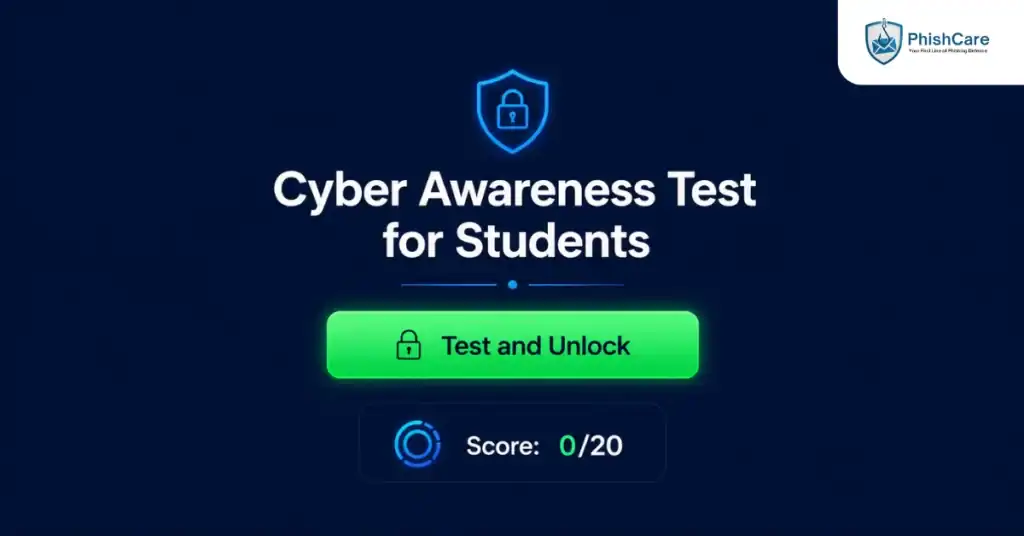
This assessment was built by security analysts to help you see how well you can spot a trap before you click. Whether you are a student testing your own safety habits or a teacher looking for a quick way to grade a class on cybersecurity basics, this tool gives you an objective score based on 20 real-world scenarios.
How to use this for class:
If you are a student taking this for a grade, simply finish the quiz, take a screenshot of your final score screen, and send that image to your teacher. If you are an instructor, you can use these results to see which topics (like phishing or deepfakes) your students are struggling with the most.
Why this assessment matters:
- Analyst-Curated: These aren’t random questions; they are based on common attack patterns we see in 2026.
- Instant Results: No waiting for a teacher to grade it—you get your score and an explanation for every answer the moment you finish.
- Randomized: Every time you restart the quiz, the questions and answers shuffle, so you can test yourself multiple times to make sure you’ve truly learned the concepts.
What This Quiz Covers
This cybersecurity awareness quiz tests you across four core threat areas that are most relevant to students in 2026:
- Phishing: How to identify fake emails and fraudulent links.
- Deepfakes: How to spot AI-generated voice and video scams.
- Social Engineering: Recognizing manipulation tactics that don’t require technical hacks.
- Cyber Hygiene: The non-negotiable basics like MFA and password safety.
What Your Score Means
| Score | Level | Meaning |
|---|---|---|
| 18 – 20 | Cyber Pro | Excellent. You spot threats quickly. |
| 14 – 17 | Aware | Good. Brush up on deepfake tactics. |
| 0 – 13 | At Risk | Review the safety basics and retake. |
Key Cybersecurity Lessons
1. Phishing urgency is a trap: If a message demands you click a link immediately to “save your account,” it is likely a scam.
2. Your voice can be cloned: If a “teacher” or “parent” calls asking for sensitive info, hang up and call them back on their real number.
3. Trust is the exploit: Social engineers don’t hack computers; they hack human trust. Always verify identities through a second, trusted channel.
4. MFA is your best shield: Always enable Multi-Factor Authentication (MFA) on your student portal, email, and social accounts.
Need to email your teacher?
Copy this template to your email after you take your screenshot:
Summary: Mastering Cybersecurity in 2026
The Bottom Line: Cyber threats are evolving, but your defenses can too. This assessment has tested your ability to identify the three biggest risks facing students today: phishing (malicious links), deepfakes (AI-impersonation), and social engineering (psychological manipulation).
Whether you scored as a Cyber Pro or discovered you need to brush up on the basics, remember that cybersecurity isn’t a one-time test—it’s a daily habit. By staying skeptical of urgent requests, verifying identities, and using tools like Multi-Factor Authentication (MFA), you become a harder target for attackers. Stay alert, verify the source, and keep your data safe.
Frequently Asked Questions
Who is this cybersecurity quiz designed for?
This quiz is designed for high school students, college students, and university learners who want to test their knowledge of phishing, deepfakes, and social engineering. Teachers can use it to conduct classroom assessments.
Can I use this quiz in my classroom?
Yes. Students can complete the quiz independently, take a screenshot of their final score screen, and submit it to their teacher as proof of completion.
Is this cybersecurity quiz free?
Yes, this cybersecurity awareness quiz is completely free for students and teachers. No registration, login, or payment is required.
What topics does the quiz cover?
The quiz covers four key areas: Phishing identification, Deepfake awareness, Social engineering tactics, and general cybersecurity hygiene like MFA and password safety.