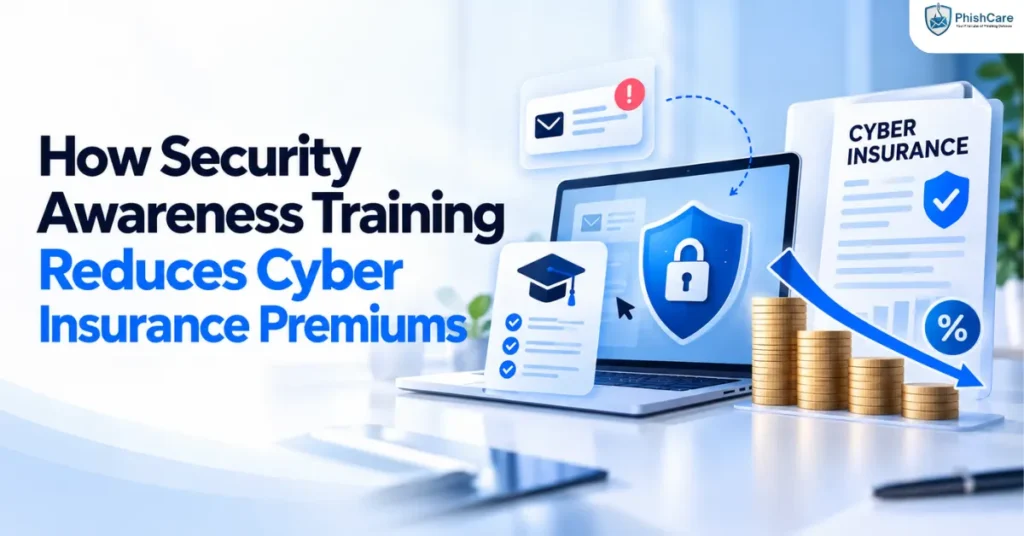
Cyber insurance has become an essential component of modern risk management. As cyber attacks continue to increase in frequency and sophistication, organisations rely on cyber insurance policies to help mitigate the financial impact of data breaches, ransomware incidents, and operational disruptions. However, obtaining affordable cyber insurance coverage has become increasingly challenging in recent years.
Insurance providers are now conducting more detailed risk assessments before issuing policies or determining premiums. Instead of focusing solely on technical security controls, insurers evaluate the overall cyber resilience of an organisation. This includes reviewing employee behaviour, internal security practices, and the organisation’s ability to detect and respond to threats.
One factor that has become increasingly important in cyber insurance underwriting is security awareness training. Because phishing and social engineering attacks remain common entry points for cyber incidents, insurers recognise that employee behaviour plays a significant role in determining risk exposure.
Organisations that demonstrate strong security awareness programmes, including phishing simulations and continuous training, may be better positioned to demonstrate their approach to managing cyber risk. Depending on the insurer and the policy, this evidence may contribute to underwriting decisions and policy terms. Understanding how security awareness training influences cyber insurance assessments can help organisations strengthen their security posture and demonstrate a more proactive approach to risk management.
Key Takeaway
Security Awareness Can Strengthen Your Cyber Insurance Risk Profile
Regular employee training, realistic phishing simulations, and clear incident-reporting procedures help organisations address human-related cyber risks. Documented results can support discussions with insurers, although premium reductions and coverage decisions are never guaranteed.
Understanding Human Risk
Why Cyber Insurance Providers Focus on Human Risk
For many years, cyber insurance assessments focused primarily on technical infrastructure. Insurers evaluated firewalls, endpoint protection tools, data encryption practices, and backup procedures.
While these controls remain important, insurers have recognised that many cyber incidents occur not because technical systems fail, but because attackers successfully manipulate employees. Phishing emails, impersonation scams, and fraudulent requests can bypass technical defences when employees respond without verifying the legitimacy of a message.
Understanding how phishing attacks work and why they succeed can help organisations identify the human vulnerabilities that technical security controls alone may not address.
Because human behaviour is frequently the first point of compromise, insurers may consider employee awareness an important indicator of cyber risk. Organisations that can demonstrate proactive efforts to educate employees and reduce phishing susceptibility are better positioned to explain how they manage these risks.
Risk Management Insight
Cyber Resilience Goes Beyond Technology
Strong technical controls remain essential, but employee awareness, verification habits, and timely reporting also help organisations manage phishing and social engineering risks.
Phishing and Financial Exposure
The Link Between Phishing Risk and Insurance Claims
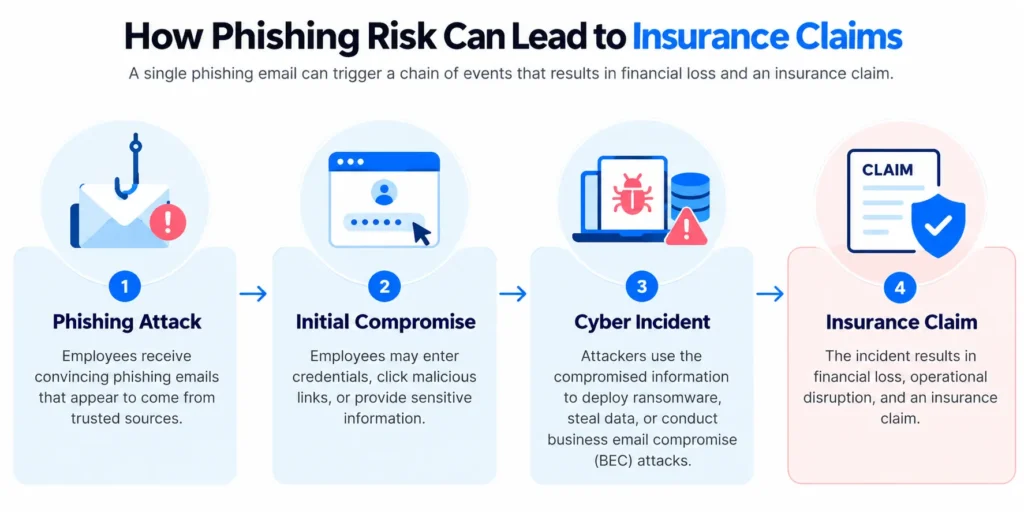
Phishing attacks contribute to many cyber incidents that can result in insurance claims. These attacks often lead to credential theft, ransomware deployment, or business email compromise incidents that result in financial loss.
When insurers evaluate potential policyholders, they look for indicators that phishing-related risk is being actively managed. Security awareness training programmes that include realistic phishing simulations help demonstrate that organisations are taking steps to address this threat.
Reducing the likelihood that employees fall for phishing emails can help decrease the probability of costly incidents. From an insurer’s perspective, evidence of an effective awareness programme can provide useful context when evaluating an organisation’s approach to cyber risk management.
To understand this relationship in more detail, explore how phishing simulation and cyber insurance are connected, including how campaign data can help organisations document their security awareness efforts.
Key Risk Insight
Measure Awareness to Better Understand Human Risk
Phishing simulation results, employee reporting rates, and training records can help organisations assess awareness over time. These measures may support insurance discussions, but they do not guarantee lower premiums or claim acceptance.
Building a Stronger Security Culture
How Security Awareness Training Improves Risk Profiles
Security awareness training strengthens an organisation’s risk profile in several ways. By helping employees recognise threats, report suspicious activity, and verify unusual requests, organisations can improve their approach to managing human-related cyber risks.
Recognise Common Threats
Employees learn to identify phishing emails, suspicious attachments, deceptive links, and impersonation attempts. Better threat recognition can reduce the likelihood of interacting with malicious messages.
Encourage Early Reporting
Awareness training encourages employees to report suspicious emails and potential security incidents promptly. Early reporting gives security teams an opportunity to investigate threats and limit further exposure.
Reinforce Verification Practices
Employees learn to verify unusual requests, particularly those involving financial transactions or sensitive information. These habits help reduce the risk of fraud and unauthorised disclosure.
Turn Awareness Into Measurable Progress
Regular training, phishing simulation results, and employee reporting trends can help organisations evaluate awareness over time and identify areas that need improvement.
Evidence-Based Risk Management
Demonstrating Security Maturity to Insurers
When applying for cyber insurance, organisations are often asked to complete detailed questionnaires about their security practices. These assessments may include questions about employee awareness programmes, phishing simulation campaigns, and training frequency.
Being able to document structured awareness initiatives provides evidence that the organisation has implemented proactive risk management measures. Records of training activities, campaign outcomes, and employee reporting trends can help explain how human-related cyber risks are being addressed.
01 / Documentation
Training Records
Maintain records of awareness sessions, participation, training frequency, and completed learning activities.
02 / Measurement
Campaign Results
Review phishing simulation outcomes, employee responses, and reporting rates to identify areas for improvement.
03 / Improvement
Ongoing Assessment
Use the results to refine training, address recurring mistakes, and strengthen employee awareness over time.
Some insurers may also consider behavioural metrics, such as phishing simulation results or reporting rates, when evaluating risk. Organisations that can demonstrate measurable improvement in employee awareness may be better positioned to explain their security practices during underwriting. The specific evidence considered varies by insurer and policy.
For a related perspective on documenting security controls and awareness activities, explore how phishing simulation can support SOC 2 compliance efforts.
Underwriting Takeaway
Make Your Security Efforts Easier to Demonstrate
Clear documentation and consistent measurement help organisations explain their awareness initiatives. These records can support risk discussions with insurers, although they do not guarantee policy approval or lower premiums.
Financial Impact of Cybersecurity
Long-Term Financial Benefits
Lower cyber insurance premiums are only one potential financial benefit associated with strong security awareness programmes. By helping reduce phishing risk, organisations may also decrease their exposure to costly incidents that can disrupt operations, result in financial losses, or affect future insurance terms.
A history of fewer security incidents can contribute to an organisation’s long-term risk profile. Maintaining consistent awareness training and improving employee reporting practices can help strengthen cyber resilience and support more informed discussions with insurance providers. Investing in employee awareness therefore supports both operational security and financial risk management.
The Long-Term Value
Reduce Exposure. Strengthen Resilience. Support Financial Stability.
Security awareness is an ongoing investment in employee behaviour, incident prevention, and organisational preparedness. Its value extends beyond insurance discussions to the broader goal of reducing the likelihood and impact of cyber incidents.
Benefit 01
Fewer Preventable Incidents
Better threat recognition and verification habits can help reduce the likelihood of successful phishing attacks.
Benefit 02
Stronger Risk Management
Consistent training and documented results help organisations identify weaknesses and improve their security practices.
Benefit 03
Long-Term Financial Protection
Reducing incident exposure can help limit potential disruption and financial losses, while supporting ongoing insurance risk discussions.
Important: Insurance premiums, coverage terms, and renewal decisions depend on the insurer, policy conditions, claims history, and overall risk assessment. Security awareness training does not guarantee lower premiums.
Practical Security Awareness
Strengthening Awareness Programs With PhishCare
Security awareness programmes are most effective when they include practical exposure to realistic cyber threats. PhishCare, a phishing simulation and security awareness platform developed by CyberSapiens, helps organisations strengthen employee awareness through structured phishing simulation campaigns.
PhishCare delivers simulated phishing emails that resemble common attack techniques, including impersonation attempts, urgent financial requests, and routine business communications that appear legitimate. By encountering these simulations in a controlled environment, employees can gain practical experience identifying suspicious messages.
When employees interact incorrectly with simulated phishing emails, PhishCare can provide immediate feedback explaining the warning signs they may have missed. This contextual learning helps reinforce awareness and improve threat recognition. Employees can also learn to recognise deceptive sign-in pages through resources such as this guide on how to spot a fake login page.
Capability 01
Realistic Simulations
Simulated phishing scenarios help employees practise identifying suspicious emails and common social engineering tactics.
Capability 02
Immediate Learning Feedback
Explanations following simulated interactions help employees understand missed warning signs and reinforce safer behaviour.
Capability 03
Behavioural Reporting
Campaign reporting insights help organisations review employee responses, identify recurring weaknesses, and monitor awareness progress over time.
These insights can help organisations evaluate whether their awareness initiatives are improving employee vigilance and addressing phishing risks. Documented campaign results may also provide supporting evidence during broader cyber risk and insurance discussions, depending on the insurer’s assessment criteria.
Strengthen Your Human Layer of Defence
Turn Phishing Simulations Into Practical Learning
Build a more security-aware workforce with structured simulations, educational feedback, and campaign insights that support continuous improvement.
A Proactive Approach to Cyber Resilience
Aligning Security Awareness With Risk Management
Cyber insurance providers increasingly assess how organisations manage cyber risks. Employee awareness training plays an important role because it addresses the human element of security, particularly the risks associated with phishing, impersonation, and social engineering.
Organisations that prioritise awareness programmes and phishing simulation initiatives can demonstrate that they are taking proactive steps to reduce exposure to common attack methods. Regular training, clear reporting procedures, and documented campaign results can help organisations evaluate their progress and explain their security practices during insurance assessments.
As cyber threats continue to evolve, integrating security awareness into the broader risk management strategy remains valuable for operational protection and financial preparedness. Rather than treating employee training as a one-time activity, organisations should review results regularly and use them to improve security behaviour over time.
Priority 01
Train Continuously
Reinforce employee knowledge through regular awareness sessions and realistic phishing simulations.
Priority 02
Measure Progress
Review simulation outcomes, employee reporting trends, and recurring awareness gaps.
Priority 03
Document Evidence
Maintain records of awareness activities and improvements to support internal risk reviews and insurance discussions.
The Bigger Picture
Make Employee Awareness Part of Your Risk Strategy
A proactive security awareness programme can help organisations improve employee behaviour, strengthen cyber resilience, and provide useful evidence of risk management efforts. Insurance outcomes still depend on each provider’s underwriting criteria and policy terms.
Common Questions Answered
Frequently Asked Questions
Find out how security awareness training, phishing simulations, and employee behaviour can influence cyber risk management and insurance assessments.
1. Can security awareness training lower cyber insurance premiums?
Security awareness training may support an organisation’s cyber insurance risk assessment by demonstrating proactive risk management. However, lower premiums are not guaranteed. Pricing depends on the insurer’s underwriting criteria, the organisation’s overall risk profile, claims history, and policy terms.
2. Why do cyber insurance providers care about employee awareness?
Phishing and social engineering can expose organisations to credential theft, fraudulent payments, and other security incidents. Employee awareness training helps people recognise suspicious messages, verify unusual requests, and report potential threats promptly.
3. What types of security awareness training do insurers look for?
Depending on the insurer, assessments may consider regular employee training, phishing simulations, incident-reporting procedures, and documentation of awareness activities. Organisations should review their specific policy application and underwriting requirements.
4. How do phishing simulations help organisations assess employee risk?
Phishing simulations allow organisations to observe how employees respond to controlled phishing scenarios. Campaign results can help identify awareness gaps, assess reporting behaviour, and guide future training. Repeated assessments can also help track changes in employee responses over time.
5. Can phishing simulation reports support cyber insurance assessments?
Phishing simulation reports may provide supporting evidence of an organisation’s security awareness activities, employee responses, and improvement efforts. Whether an insurer considers these reports depends on its assessment process. Reports do not guarantee policy approval, specific coverage, or reduced premiums.
Looking to Strengthen Employee Awareness?
Explore PhishCare’s phishing simulation platform to learn how structured campaigns and behavioural insights can support ongoing security awareness initiatives.
Content Reviewed By

Mohammed Nawaz Sajjad
Sr. Security Analyst at CyberSapiens | Phishing Simulation | Ethical Hacker | Bug Hunter | Red Team
Nawaz is a practising security analyst specialising in phishing simulation campaigns, employee awareness assessments, red team exercises, and ethical hacking. He leads phishing simulation deployments at PhishCare, a product developed by CyberSapiens, with hands-on experience evaluating and deploying phishing simulation tools across organisations in multiple industries and regions.
View LinkedIn ProfileStrengthen Your Human Layer of Defence
Build a Security-Aware Workforce With PhishCare
Help employees recognise phishing threats, reinforce safer security habits, and measure awareness progress through structured phishing simulations and campaign insights.
Stronger awareness supports cyber resilience. Insurance outcomes depend on individual underwriting criteria and policy terms.