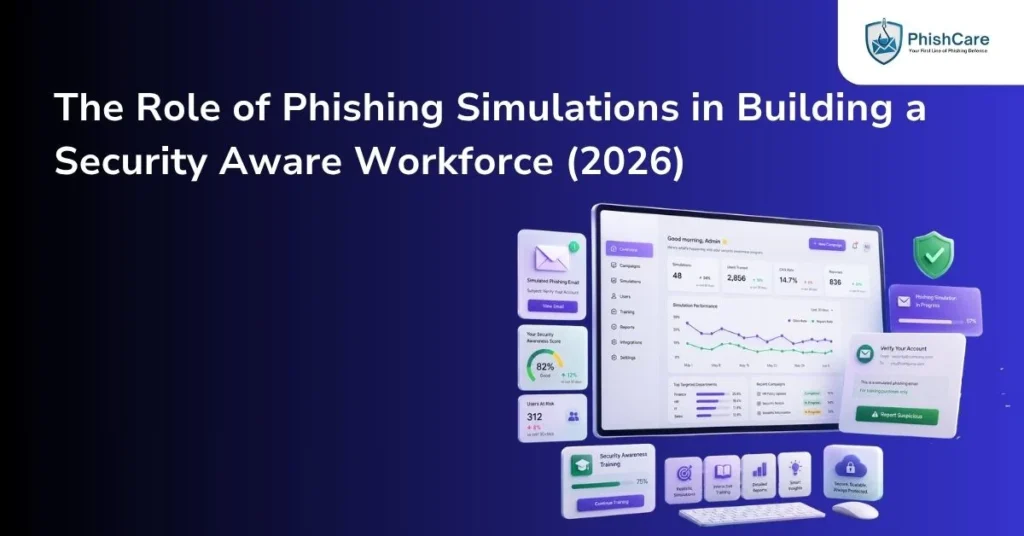
Why Phishing Simulations Matter More Than Traditional Security Training
Cybersecurity awareness programs often fail because employees rarely experience realistic attack scenarios during training. Phishing simulations bridge that gap by exposing teams to controlled phishing attacks that mirror real-world threats.
The Role of Phishing Simulations in Building a Security Aware Workforce goes beyond awareness presentations and annual compliance sessions. Organizations now use recurring phishing drills to measure employee behavior, improve reporting habits, reduce credential theft risks, and strengthen long-term cyber resilience across departments.
PhishCare Awareness Insights
PhishCare by CyberSapiens helps organizations build stronger security awareness cultures using realistic phishing simulations, reporting analytics, and employee-focused awareness campaigns.
Trusted By Teams Across Finance, IT, Healthcare, Banking, and Enterprise Sectors





Why Traditional Security Awareness Training Often Fails
Many organizations still rely on annual awareness sessions, static compliance presentations, or generic cybersecurity videos. While these methods help introduce basic security concepts, they rarely prepare employees for real phishing attacks that evolve continuously.
Employees Forget Generic Training Quickly
Most awareness sessions are passive. Employees may complete mandatory training modules but fail to retain practical phishing detection skills over time. Without repeated exposure, security awareness declines rapidly.
Attack Techniques Change Constantly
Modern phishing campaigns use business email compromise, fake login pages, invoice fraud, and AI-generated messaging. Static awareness content cannot replicate these evolving attack patterns effectively.
Organizations Lack Real Behavioral Data
Traditional awareness programs often measure completion rates instead of actual security behavior. Security teams need visibility into click rates, reporting habits, and repeat-risk users.
Why Simulation-Based Security Awareness Creates Better Results
Phishing simulations move beyond theoretical learning by placing employees inside realistic attack scenarios. Instead of simply reading about phishing threats, users actively interact with suspicious emails, login pages, attachments, and spoofed communication attempts.
This practical approach helps organizations identify risky behavior patterns early while continuously improving reporting culture, response habits, and workforce-wide cyber awareness maturity.
We recently used PhishCare for a phishing simulation, and I’ve got to say, their email templates were top-notch. The realism and variety of the templates were impressive, really testing our team’s vigilance. The level of detail they put into crafting these emails was evident, making the simulation both challenging and effective.
What Phishing Simulations Actually Measure Inside Organizations
Phishing simulations are not just awareness exercises. They provide measurable insights into employee behavior, phishing susceptibility, reporting culture, and organizational security readiness across departments and user groups.
Security Teams Need More Than Completion Rates
Traditional awareness programs often track only whether employees completed a training module. Phishing simulations provide deeper behavioral visibility by identifying who clicks suspicious links, who reports phishing attempts, and which departments remain most vulnerable to targeted attacks.
Phishing Click Rates
Click tracking helps organizations understand how employees react to phishing emails under realistic conditions. High click rates often indicate gaps in awareness, email verification habits, or attack recognition skills.
Email Reporting Behavior
Strong reporting culture is one of the clearest indicators of workforce security maturity. Phishing simulations measure whether employees actively report suspicious emails instead of ignoring them.
Repeat-Risk Employees
Some users repeatedly interact with phishing simulations despite prior awareness sessions. Identifying these patterns allows security teams to provide targeted remediation and focused training.
Department-Level Vulnerability Trends
Phishing simulations help identify which teams or departments face higher phishing exposure. Finance, HR, IT, and executive users are often targeted differently and require specialized awareness strategies.
Measure Real Employee Security Behavior
PhishCare helps organizations analyze phishing behavior patterns, improve reporting culture, and strengthen workforce-wide security awareness through realistic phishing simulations.
Traditional Awareness Training vs Phishing Simulation Programs
Organizations often assume annual awareness training alone is enough to reduce phishing risks. In reality, phishing simulations provide continuous behavioral reinforcement and measurable security awareness improvements that static training cannot deliver.
| Security Awareness Area | Traditional Training | Phishing Simulations |
|---|---|---|
| Employee Engagement | Usually passive video sessions or presentations completed once a year | Interactive real-world phishing scenarios that actively test employee responses |
| Behavioral Visibility | Limited visibility beyond completion percentages | Tracks clicks, reporting behavior, repeat-risk users, and department trends |
| Attack Realism | Often theoretical with generic cybersecurity examples | Simulates modern phishing attacks, spoofed emails, and credential theft attempts |
| Continuous Improvement | Awareness often declines after annual training cycles | Recurring phishing campaigns continuously reinforce cyber awareness habits |
| Risk Identification | Difficult to identify high-risk employees or departments | Provides measurable insights into organizational phishing vulnerabilities |
| Security Culture Impact | Often treated as a compliance checkbox exercise | Builds a proactive and security-aware workforce culture over time |
Behavior-Based Security Awareness
Phishing simulations focus on employee actions rather than theoretical understanding alone. This helps security teams evaluate how users behave under realistic attack conditions.
Continuous Risk Reduction
Regular phishing drills reinforce awareness habits continuously, helping organizations reduce phishing susceptibility over time instead of relying on one-time training.
Measurable Security Improvement
Organizations can monitor phishing awareness maturity through reporting rates, click reduction trends, employee engagement metrics, and recurring simulation results.
Build a More Security-Aware Workforce With PhishCare
PhishCare helps organizations move beyond checkbox training with realistic phishing simulations, behavioral analytics, and continuous awareness improvement programs.
How PhishCare Helps Organizations Build Security-Aware Workforces
PhishCare by CyberSapiens helps organizations strengthen employee cybersecurity awareness through realistic phishing simulations, behavioral analytics, reporting visibility, and recurring awareness campaigns designed for modern phishing threats.
Modern Phishing Simulations Designed for Measurable Awareness Improvement
PhishCare enables organizations to simulate sophisticated phishing attacks in controlled environments while helping employees learn how to recognize suspicious emails, spoofed domains, credential harvesting attempts, and social engineering techniques.
Security teams gain actionable visibility into employee behavior, phishing response patterns, reporting culture, and department-level awareness trends through recurring simulation campaigns.
Realistic Phishing Campaigns
Simulate real-world phishing emails using customized templates, spoofing scenarios, and social engineering techniques.
Behavioral Analytics
Track employee click rates, reporting behavior, repeat-risk users, and awareness trends across campaigns.
Department Risk Insights
Identify vulnerable teams and users to improve awareness programs with targeted remediation strategies.
Awareness Reporting
Generate detailed simulation reports that support internal awareness reviews and compliance readiness efforts.
Global phishing simulation campaigns across multiple industries and organization sizes.
Improvement observed after recurring phishing awareness and simulation exercises.
Experience supporting phishing awareness programs across high-risk sectors globally.
Organizations Using PhishCare
Organizations across finance, healthcare, IT, banking, and enterprise sectors use PhishCare to strengthen workforce security awareness through phishing simulation campaigns.


Strengthen Workforce Security Awareness With PhishCare
Run realistic phishing simulations, improve employee awareness, and gain measurable visibility into organizational phishing risks.
Behavioral Metrics That Matter in Phishing Simulations
Effective phishing simulations are not only about sending simulated phishing emails. The real value comes from measuring how employees respond, how quickly risks are identified, and how awareness improves across recurring campaigns.
Phishing Email Click Rates
Click rate analysis helps organizations understand how employees react to suspicious emails. Security teams can identify awareness gaps and monitor improvement trends over time.
Credential Submission Tracking
Simulated credential harvesting pages reveal how employees respond to fake login portals and spoofed authentication requests used in modern phishing attacks.
Suspicious Email Reporting
Reporting behavior is one of the strongest indicators of workforce security maturity. Employees who actively report suspicious emails help reduce organizational response time.
Department Risk Analysis
Finance, HR, IT, healthcare, and executive teams often experience different phishing exposure levels. Simulations help identify vulnerable user groups.
Why Behavioral Metrics Improve Security Awareness Programs
Organizations cannot improve what they do not measure. Phishing simulations provide visibility into real employee behavior rather than relying only on training completion percentages.
By tracking click behavior, reporting culture, repeat-risk users, and phishing susceptibility trends, security teams can continuously strengthen awareness maturity across the workforce.
Track Employee Security Awareness With Real Metrics
PhishCare helps organizations measure phishing behavior, identify high-risk users, and improve workforce awareness through realistic phishing simulations.
Industries Most Targeted by Phishing Attacks
Phishing attacks affect every industry, but sectors handling financial data, sensitive healthcare information, customer records, and enterprise systems often face significantly higher phishing exposure levels and targeted social engineering attempts.
Finance & Banking
Financial institutions are heavily targeted because phishing campaigns often focus on wire transfers, payment fraud, invoice manipulation, and credential theft attempts involving sensitive banking systems.
High-risk targets:
Finance teams, accounting staff, executives, payment approval users
Healthcare Organizations
Healthcare providers manage highly sensitive patient information and often face phishing campaigns involving fake insurance requests, ransomware delivery attempts, and credential harvesting attacks.
High-risk targets:
Hospital administrators, clinical staff, patient management teams
IT & Technology Teams
Technology companies frequently encounter phishing attacks designed to steal cloud credentials, compromise SaaS platforms, or gain unauthorized access to enterprise infrastructure environments.
High-risk targets:
Developers, IT administrators, cloud operations teams, support staff
Enterprise HR & Operations
HR and operations teams are frequently targeted using fake resumes, payroll scams, onboarding fraud, and business email compromise attacks designed to exploit employee trust.
High-risk targets:
HR managers, recruiters, payroll teams, operations coordinators
Why Industry-Specific Phishing Simulations Matter
Different industries experience different phishing attack patterns. Generic awareness programs often fail because they do not reflect the real threats employees encounter within their roles and departments.
Industry-specific phishing simulations help employees recognize realistic attack techniques while improving reporting culture, phishing awareness maturity, and workforce-wide security resilience.
Run Industry-Focused Phishing Simulations With PhishCare
PhishCare helps organizations launch realistic phishing simulations tailored for finance, healthcare, IT, HR, banking, and enterprise security awareness programs.
How Organizations Use PhishCare to Strengthen Workforce Security Awareness
Organizations across finance, healthcare, banking, IT, and enterprise sectors use PhishCare to improve phishing awareness, strengthen reporting culture, and reduce employee-driven cybersecurity risks through realistic phishing simulation campaigns.
Phishing Simulations Conducted
Simulation campaigns conducted across multiple industries and organization sizes globally.
Awareness Improvement Rate
Organizations observed measurable awareness improvements after recurring phishing simulations.
Industries Supported
Security awareness programs supported across multiple high-risk industries and enterprise teams.
Trusted by Organizations Across Multiple Industries
Organizations use PhishCare to strengthen workforce security awareness using realistic phishing simulations, awareness analytics, and recurring phishing drills tailored for modern cyber threats.


We recently used PhishCare for a phishing simulation, and I’ve got to say, their email templates were top-notch. The realism and variety of the templates were impressive, really testing our team’s vigilance. The level of detail they put into crafting these emails was evident, making the simulation both challenging and effective.
Build a Security-Aware Workforce With PhishCare
Launch realistic phishing simulations, measure employee awareness, and improve workforce cybersecurity resilience with PhishCare.
How Phishing Simulations Support Compliance and Security Readiness
Modern cybersecurity frameworks increasingly recognize employee awareness and phishing resilience as important components of organizational security maturity. Phishing simulations help organizations strengthen awareness culture while improving visibility into workforce cyber risk.
Why Security Awareness Programs Matter for Compliance Readiness
Security awareness programs are no longer treated as optional cybersecurity activities. Organizations handling customer data, financial information, healthcare records, or enterprise systems are increasingly expected to demonstrate ongoing employee awareness efforts.
Phishing simulations provide measurable insights into employee awareness behavior, reporting culture, and phishing resilience while helping organizations strengthen internal cybersecurity practices.
Security Awareness Visibility
Measure workforce awareness levels through recurring phishing simulations and behavioral reporting.
Behavioral Risk Insights
Identify vulnerable users, departments, and phishing behavior trends across the organization.
Simulation Reporting
Generate awareness reports that support internal security reviews and ongoing improvement initiatives.
Continuous Awareness Improvement
Recurring phishing drills help reinforce long-term cybersecurity awareness across employees.
Recurring phishing simulations help organizations strengthen employee awareness programs that support broader information security management initiatives.
Awareness simulations provide additional visibility into workforce security practices and phishing awareness maturity across operational teams.
Healthcare and payment-processing organizations use phishing awareness exercises to strengthen workforce security practices and reduce phishing exposure.
Important Compliance Clarification
PhishCare’s campaign reports provide an additional documentation boost for organizations working towards ISO 27001, SOC 2 Type II, PCI DSS, HIPAA, or NIST CSF, where ongoing security awareness training is recognized as a best practice by auditors and certification bodies.
Strengthen Security Awareness and Compliance Readiness
Use PhishCare to launch recurring phishing simulations, improve workforce awareness, and strengthen organizational phishing resilience.
Best Practices for Running Effective Phishing Simulations
Running phishing simulations successfully requires more than sending random phishing emails to employees. Organizations need realistic scenarios, recurring awareness programs, behavioral analytics, and a long-term improvement strategy to strengthen workforce cybersecurity awareness effectively.
Use Realistic Phishing Scenarios
Employees should experience phishing simulations that closely resemble modern phishing attacks, including fake invoices, password reset emails, spoofed login pages, and business email compromise attempts.
Run Simulations Regularly
Awareness declines over time when phishing exercises are conducted only once a year. Recurring phishing simulations help reinforce long-term security habits and reporting culture.
Measure Behavioral Metrics
Organizations should monitor click rates, credential submissions, reporting behavior, repeat-risk users, and department-level awareness trends across campaigns.
Avoid Employee Shaming
Phishing simulations should improve awareness culture rather than embarrass employees. Constructive awareness training encourages stronger participation and better reporting habits.
Customize Simulations by Department
Finance, HR, healthcare, banking, and IT teams face different phishing risks. Role-specific simulations create more realistic and effective awareness training.
Continuously Improve Campaigns
Phishing attack techniques evolve continuously. Organizations should regularly update phishing templates and awareness campaigns to reflect emerging phishing trends.
What Makes a Phishing Simulation Program Effective
Effective phishing awareness programs combine realistic attack simulations, recurring awareness exercises, behavioral analytics, and positive employee reinforcement strategies.
Organizations that continuously measure phishing behavior and improve awareness culture are better positioned to reduce phishing exposure and strengthen workforce cyber resilience.
Launch Effective Phishing Simulations With PhishCare
Strengthen workforce awareness using realistic phishing simulations, employee behavior analytics, and recurring awareness campaigns.
Why Organizations Choose PhishCare for Security Awareness Programs
Organizations need more than basic awareness presentations to reduce phishing risks effectively. PhishCare helps teams build measurable security awareness through realistic phishing simulations, reporting visibility, and continuous workforce awareness improvement programs.
Built for Organizations That Want Measurable Security Awareness Results
PhishCare helps organizations move beyond checkbox cybersecurity training by delivering phishing simulations that mirror modern attack techniques, social engineering patterns, and real-world phishing campaigns.
Security teams gain measurable visibility into employee awareness maturity, phishing behavior trends, reporting culture, and recurring awareness improvements across departments.
Realistic Simulation Templates
Simulate phishing attacks using realistic email templates designed around modern phishing tactics and social engineering techniques.
Behavioral Awareness Analytics
Track employee click rates, reporting habits, credential submissions, and phishing susceptibility patterns across campaigns.
Department-Level Insights
Identify vulnerable departments and high-risk users to improve awareness training and phishing resilience strategies.
Recurring Awareness Campaigns
Strengthen workforce awareness continuously through recurring phishing drills and measurable awareness improvement programs.
Phishing Simulations Conducted
Experience running phishing awareness campaigns across finance, IT, healthcare, banking, and enterprise sectors.
Awareness Improvement Success
Organizations observed measurable awareness improvements through recurring phishing simulation campaigns.
Awareness Program Experience
Security awareness programs supported across finance, healthcare, IT, HR, banking, and enterprise teams.
The realism and variety of the phishing templates were impressive, really testing our team’s vigilance. It’s clear the PhishCare team understands how modern phishing attacks work and how to improve employee awareness effectively.
Improve Workforce Security Awareness With PhishCare
Launch realistic phishing simulations, track employee awareness behavior, and strengthen organizational phishing resilience through recurring awareness programs.
The Role of Phishing Simulations in Building a Security Aware Workforce
Organizations can no longer rely only on annual awareness presentations or static cybersecurity training to reduce phishing risks effectively. Modern phishing attacks evolve continuously, making realistic phishing simulations an essential part of workforce cybersecurity awareness programs.
Phishing Simulations Create Real Awareness
Employees improve security awareness faster when exposed to realistic phishing scenarios instead of only theoretical cybersecurity training sessions.
Behavioral Metrics Improve Visibility
Organizations gain measurable insights into click behavior, reporting culture, credential submission risks, and department-level phishing exposure.
Recurring Campaigns Reduce Risk
Continuous phishing awareness campaigns help reinforce long-term security habits and improve workforce phishing resilience over time.
Security Awareness Requires Continuous Reinforcement
The Role of Phishing Simulations in Building a Security Aware Workforce goes beyond awareness presentations and annual cybersecurity training. Effective awareness programs require continuous testing, behavioral visibility, and realistic phishing exercises.
Organizations that regularly measure phishing awareness and improve reporting culture are better positioned to reduce phishing exposure, strengthen employee vigilance, and improve workforce cybersecurity maturity.
Key Takeaways for Organizations
Phishing simulations help employees recognize real-world phishing attacks faster.
Behavioral analytics provide measurable visibility into workforce security awareness.
Recurring phishing drills strengthen long-term employee cybersecurity habits.
Organizations can reduce phishing exposure through continuous awareness improvement programs.
Build a More Security-Aware Workforce With PhishCare
Strengthen phishing awareness, improve reporting culture, and reduce workforce cyber risk using realistic phishing simulation campaigns.
Frequently Asked Questions About Phishing Simulations
Organizations exploring phishing awareness programs often have questions about phishing simulations, workforce awareness measurement, reporting culture, and long-term cybersecurity awareness improvement strategies.
What is a phishing simulation?
A phishing simulation is a controlled cybersecurity awareness exercise where organizations send realistic phishing emails to employees to measure awareness levels, identify risky behaviors, and improve phishing resilience through recurring awareness training.
Why are phishing simulations important for organizations?
Phishing simulations help organizations evaluate employee behavior under realistic attack conditions. They strengthen awareness culture, improve suspicious email reporting, and help reduce phishing-related cybersecurity risks.
How often should organizations run phishing simulations?
Most organizations benefit from recurring phishing simulations conducted monthly or quarterly. Continuous awareness reinforcement helps employees maintain stronger phishing detection habits over time.
What metrics should organizations track during phishing simulations?
Organizations should monitor click rates, credential submissions, suspicious email reporting behavior, repeat-risk users, department-level trends, and long-term awareness improvement metrics.
Can phishing simulations support compliance initiatives?
Yes. Recurring phishing simulations help organizations strengthen awareness programs that support cybersecurity frameworks and internal security readiness initiatives.
How does PhishCare help organizations improve security awareness?
PhishCare provides realistic phishing simulations, awareness analytics, reporting visibility, recurring phishing drills, and customized awareness campaigns designed to strengthen workforce cybersecurity resilience.
Security Awareness Requires More Than One-Time Training
Phishing attacks evolve continuously, making recurring awareness reinforcement essential for organizations that want to reduce phishing risks effectively.
Realistic phishing simulations help employees develop long-term phishing detection habits while giving security teams measurable visibility into workforce awareness maturity.
Start Building a More Security-Aware Workforce
Use PhishCare to launch realistic phishing simulations, improve employee awareness, and strengthen organizational phishing resilience through continuous awareness programs.
Content Reviewed By

Mohammed Nawaz Sajjad
Nawaz is a practising security analyst specializing in phishing simulation campaigns, employee awareness assessments, ethical hacking initiatives, and security awareness strategy development for organizations across multiple industries.
He works closely with organizations deploying phishing awareness programs through PhishCare, a phishing simulation and awareness platform developed by CyberSapiens. His experience includes evaluating phishing-risk exposure, awareness engagement trends, and workforce security behavior.
His work focuses on helping organizations identify employee phishing risks, strengthen internal reporting culture, improve phishing awareness maturity, and build measurable long-term security awareness programs through recurring phishing simulations.
Strengthen Workforce Awareness Against Modern Phishing Threats
PhishCare helps organizations reduce phishing risks through realistic phishing simulations, recurring awareness campaigns, employee behavior analytics, and measurable security awareness improvement programs.
Ready to Improve Employee Security Awareness?
Launch realistic phishing simulations, improve reporting culture, and build a stronger cybersecurity-aware workforce with PhishCare.
PhishCare enables organizations to create measurable cybersecurity awareness programs through realistic phishing simulations, awareness analytics, recurring phishing campaigns, and workforce-focused phishing resilience strategies.