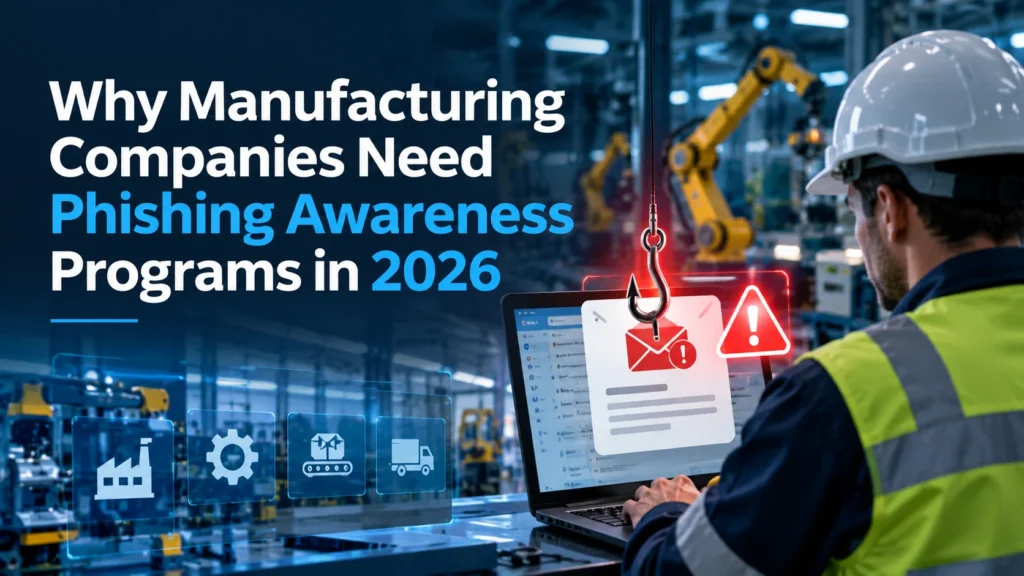
Manufacturing companies are rapidly becoming one of the most targeted sectors in the cyber threat landscape. As factories adopt digital systems, automation technologies, and connected supply chains, their exposure to cyber risks has increased significantly. While much of the focus in manufacturing cyber security has traditionally been on protecting industrial systems and operational technology, attackers are increasingly targeting employees instead.
Phishing attacks have emerged as one of the most effective entry points into manufacturing environments. These attacks are designed to exploit human behaviour rather than technical vulnerabilities. A single employee clicking on a malicious link, approving a fraudulent request, or sharing credentials can provide attackers with access to critical systems that support production, logistics, and supply chain operations.
In 2026, manufacturing companies face a unique challenge. They must protect both IT systems and operational technology while maintaining continuous production. Even minor disruptions can lead to significant financial losses, delayed deliveries, and supply chain breakdowns. This makes phishing awareness not just a security requirement, but a business necessity.
Phishing awareness programs tailored to manufacturing environments help employees recognise threats that are specific to their workflows. By strengthening the human layer of defense, organisations can reduce the likelihood of cyber incidents that impact both digital systems and physical operations.
Why Manufacturing Is a Growing Target for Phishing Attacks
Manufacturing companies are increasingly targeted because they sit at the centre of global supply chains. They interact with suppliers, distributors, logistics providers, and customers on a daily basis. This constant communication creates opportunities for attackers to use pretexting to impersonate trusted partners.
In addition, manufacturing environments often prioritise operational continuity over security processes. Employees may focus on keeping production running without interruption, which can lead to quick decision-making and reduced scrutiny of emails and requests. Attackers exploit this environment by sending phishing emails that appear related to production schedules, shipment updates, or supplier communications. These messages are designed to blend into normal workflows, making them harder to detect.
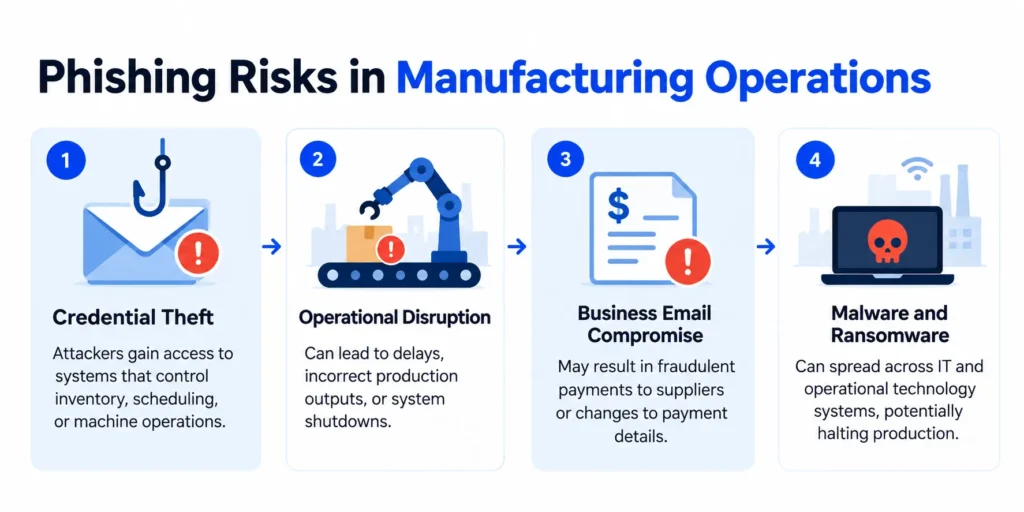
Phishing Risks in Manufacturing Operations
Phishing attacks in manufacturing environments can have direct operational consequences. Unlike other industries where attacks primarily affect data, manufacturing incidents can disrupt physical production processes.
Credential theft through fake login pages can allow attackers to access internal systems that control inventory, scheduling, or machine operations. This can lead to delays, incorrect production outputs, or system shutdowns. Business email compromise attacks may result in fraudulent payments to suppliers or changes to payment details. These incidents can disrupt financial operations and strain supplier relationships.
Phishing emails may also deliver malware that spreads across networks, potentially affecting both IT and operational technology systems. In severe cases, ransomware attacks can halt production entirely. Because manufacturing operations depend on continuity, even small disruptions can have significant financial impact.
The Role of Employees in Manufacturing Cyber Security
Employees in manufacturing environments play a critical role in maintaining cyber security. From procurement teams handling supplier communication to plant managers overseeing operations, staff members interact with digital systems throughout the day.
Unlike highly centralised IT environments, manufacturing organisations often have distributed teams working across facilities, warehouses, and production units. This increases the number of potential entry points for phishing attacks.
Employees may receive emails related to purchase orders, delivery schedules, maintenance updates, or internal approvals. Attackers mimic these communications to create convincing phishing scenarios. Without proper awareness training, employees may not recognise subtle indicators of phishing attempts.
Strengthening awareness helps employees pause, verify, and respond more cautiously.
Supply Chain Complexity Increases Risk
Manufacturing companies rely heavily on third-party vendors and suppliers. This creates an extended network of communication that attackers can exploit.
Phishing emails may impersonate suppliers requesting payment updates, shipment confirmations, or document approvals. Because these requests align with routine processes, employees may act on them without verification.
Supply chain attacks can have cascading effects. A single compromised communication may impact multiple partners, leading to widespread disruption. Awareness programs that include supplier-related phishing scenarios help employees recognise these risks and take appropriate action.
Why Generic Awareness Training Is Not Enough
Generic cyber security training often focuses on broad concepts that may not reflect the specific risks faced by manufacturing organisations.
Employees in manufacturing require training that is relevant to their roles and workflows. Awareness programs should include scenarios such as supplier impersonation, production-related communications, and operational system alerts.
Training must also be continuous. Phishing techniques evolve rapidly, and employees need regular reinforcement to stay vigilant. Spear-phishing training can help organisations test employees against targeted phishing scenarios and strengthen their ability to identify threats within the context of their daily responsibilities.
Strengthening Manufacturing Security With PhishCare
Building effective phishing awareness in manufacturing environments requires realistic and continuous exposure to relevant attack scenarios. PhishCare, developed by CyberSapiens, supports this approach through structured phishing simulation campaigns tailored to modern threat techniques.
PhishCare simulations replicate scenarios commonly encountered in manufacturing, including supplier impersonation, urgent production-related requests, and routine operational communications. These simulations help employees recognise phishing attempts within familiar workflows.
When employees interact incorrectly with simulated phishing emails, PhishCare provides immediate feedback explaining the warning signs that were missed. This moment-based learning reinforces awareness and improves decision-making.
PhishCare also provides behavioural reporting insights that allow organisations to track improvements in employee vigilance across departments and facilities. These insights help identify high-risk areas and guide targeted awareness efforts. By combining realistic simulation with continuous reinforcement, manufacturing companies can strengthen their human firewall and reduce the risk of phishing-related disruptions.
Building Resilience in Manufacturing Environments
As manufacturing continues to evolve with digital transformation, cyber security must adapt accordingly. Phishing attacks will remain a persistent threat because they target the human element of operations. Organisations that invest in phishing awareness programs tailored to manufacturing workflows are better positioned to protect both digital systems and physical operations.
Strengthening employee awareness, encouraging verification, and promoting reporting behaviour help create a resilient environment where threats are identified and addressed quickly. In a sector where downtime directly impacts revenue and supply chains, preventing a single phishing incident can protect far more than just data.
Frequently Asked Questions
Why are manufacturing companies targeted by phishing attacks?
How do phishing attacks affect manufacturing operations?
Why is phishing awareness important in manufacturing?
What makes manufacturing phishing risks different from other industries?
How can manufacturing companies reduce phishing risk?
Content Reviewed By

Nawaz is a practising security analyst specializing in phishing simulation campaigns, employee awareness assessments, red team exercises, and ethical hacking.
He leads phishing simulation deployments at PhishCare, a product developed by CyberSapiens, with hands-on experience evaluating and deploying phishing simulation tools across organizations in multiple industries and regions globally.
View LinkedIn ProfileStrengthen Your Manufacturing Workforce Against Phishing
Build stronger employee awareness with realistic phishing simulations designed to help your teams recognise and respond to evolving threats.